Remembering 'Tsunami Tommy'
Tom Horning just wanted to save the world

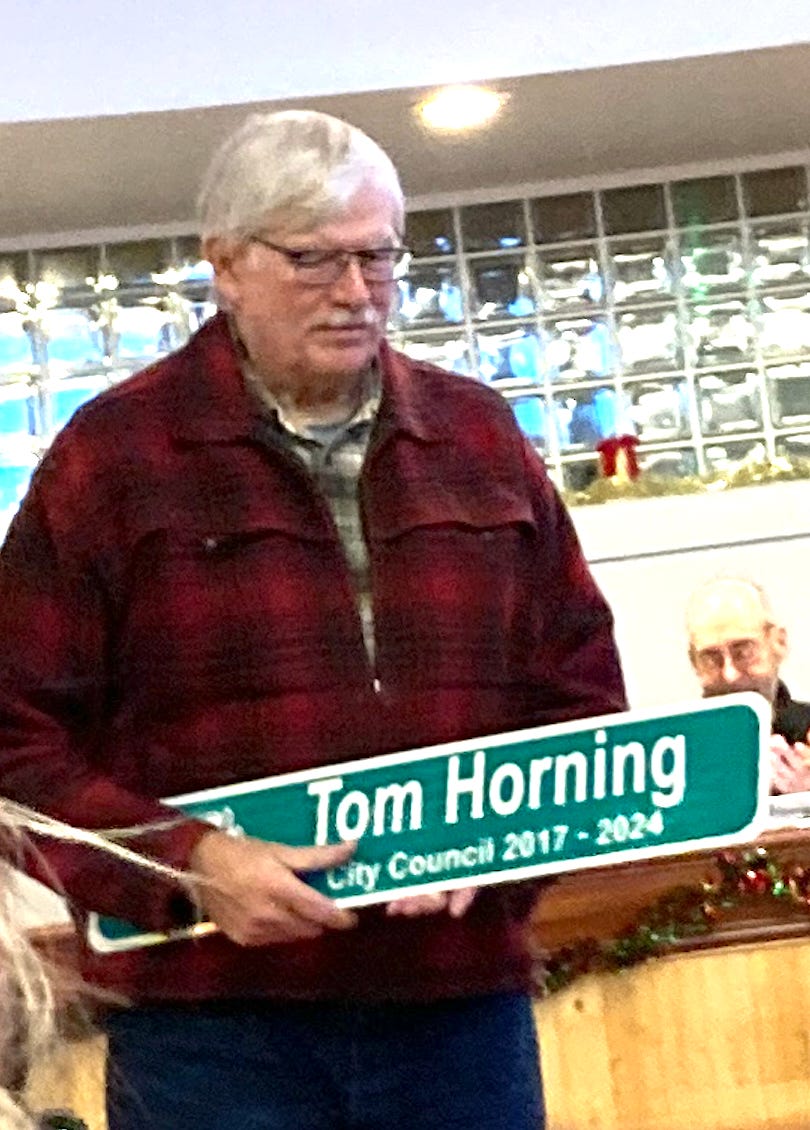
Seaside, Ore. — When I first got here they called him “Tsunami” Tommy. The geologist Tom Horning shared the court at the Pacific Way Bakery in Gearhart, regaling locals and visitors with tales of hunting for gold, riding shotgun with Mexican cartel members and eluding rattlesnakes in Montana copper mines.
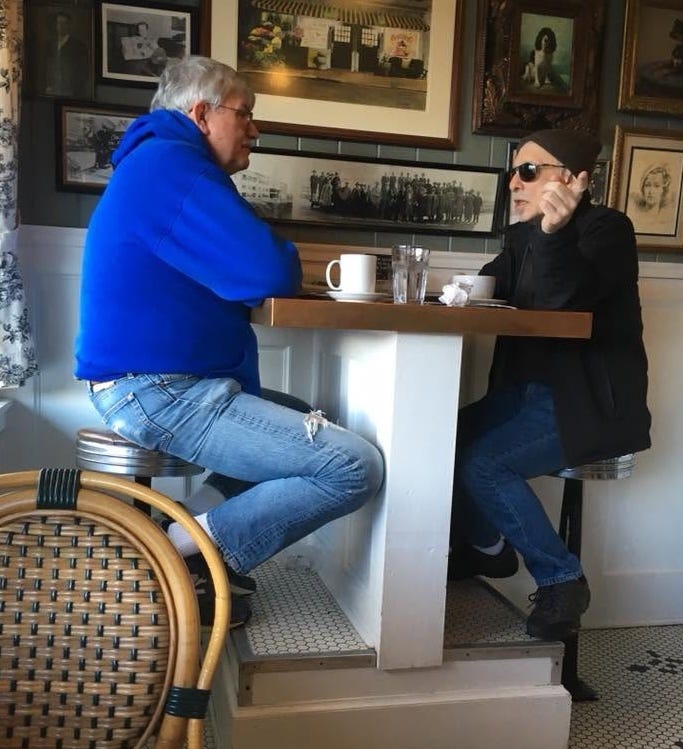
Tom Horning died on May 29, 2026 at the age of 72.
His tales were as tall as he was.
He even predicted the coming of the “Big One,” the dreaded Cascadia Subduction Zone earthquake and tsunami, writing the date on the wall of the Pacific Way Bakery with characteristic certainty.
When I first got to Gearhart to take on the job as editor of the local paper, the Signal, he said mildly, “You don’t look like you belong here.” “Why’s that?” I replied warily. “You don’t see too many sports jackets,” he said.
After that I gave all my sports jackets to Goodwill. He always continued, charmingly, to kid about my big city ways, and my small car, half the size of the pickups roaming the street like tight ends. Being a horn player, I was amused by Tom’s tale of how his brother tossed Tom’s alto saxophone in the Necanicum River.
When I was early on covering Seaside, Tom drove me around, a personal tour guide to the city’s most beautiful natural spots and lovingly shared the region’s ebb and flow, shaped by centuries of the earth’s perpetual unrest, menaced by the slipping sands beneath the sea. He was the professor outside of the classroom, leading a field trip to the muddy banks of the natural world.
Tom’s childhood was Huck Finn on the Oregon Coast. His life and history were so interesting that he takes over as the main character of Bonnie Henderson’s remarkable “The Next Tsunami: Living on a Restless Coast.”
Wrote Henderson: “I was struck by the synchronicity of the science and by the almost uncanny correspondence between the course of Tom’s life and the development of what we know of earthquake and tsunami risk on the Pacific Northwest coast.”
“Because he grew up to become a professional geologist and returned to live right at the mouth of the river in Seaside, no one in Seaside understands earthquake and tsunami science — and the politics and complicated psychology of living in a tsunami zone — better than Horning."
Seaside’s vulnerability to every category of tsunami mayhem is so high it makes the city, statistically speaking, an outlier, Henderson wrote. In chart after chart, the bar for Seaside stretched the longest, often showing the highest number of people living in the inundation zone.
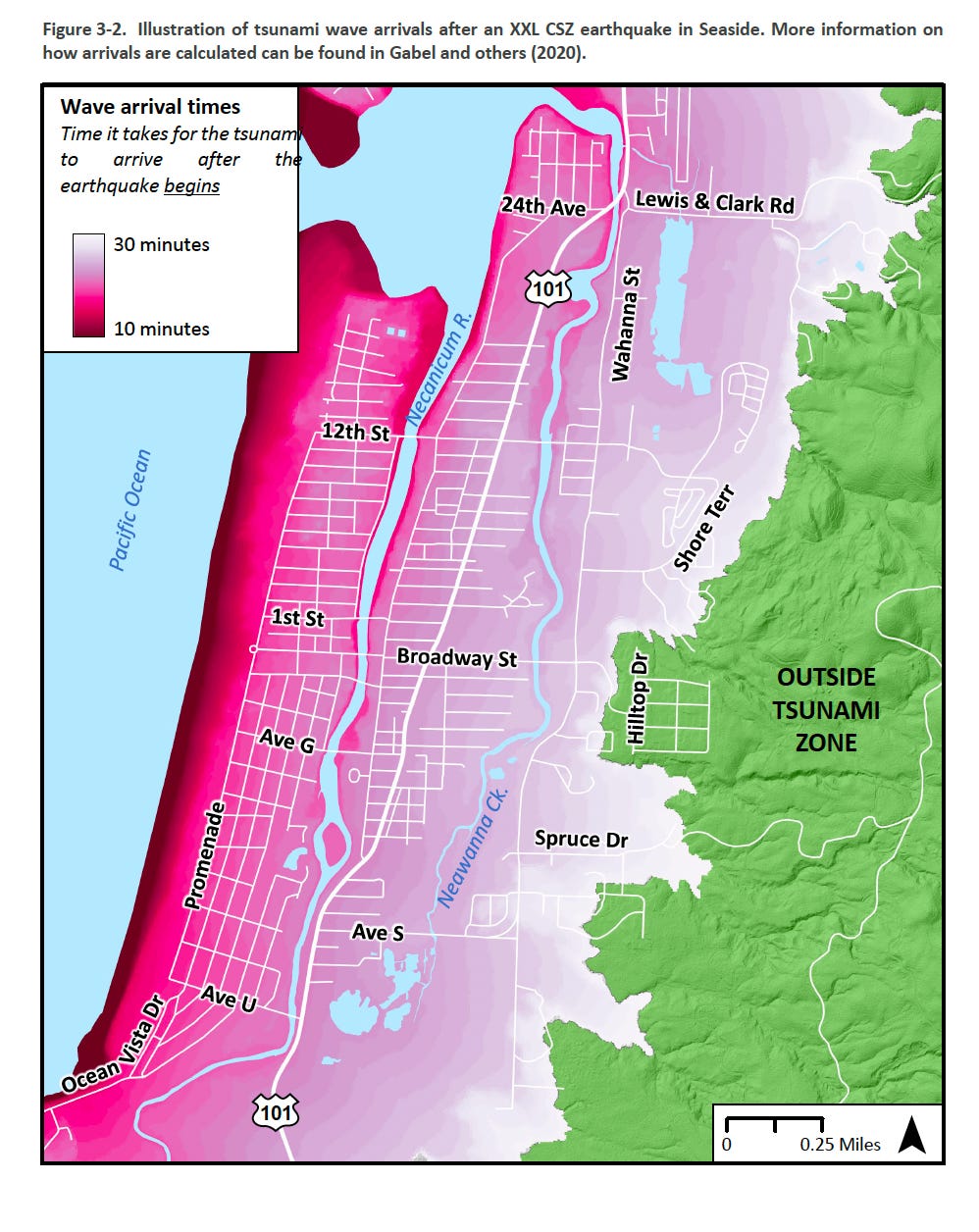
Neighboring Cannon Beach and Gearhart generally follow close behind, and are sometimes even slightly ahead in terms of tsunami vulnerability. If he didn’t invent the terms, he used them to his advantage in explaining the risk: a system of tsunamis in small, medium, large and extra-large sizes that could either come as a trickle or a torrent.
Along with brilliant academic counterparts throughout the Pacific Northwest, Horning and a new generation of scientists mapped out discoveries in the last 50 years that will enable us to prepare for the worst. Science can now pinpoint a tsunami’s arrival down to the exact minute.
Growing up in Seaside’s Venice Park neighborhood in the north end of town, Horning’s early life was marked by the very events that reshaped the city’s identity. He famously characterized the rock ’n’ roll atmosphere of the early 1960s as “Gidget Goes Crazy,” yet for him and his brother, the excitement was experienced from a distance. During the height of the 1962, 1963, and 1964 Seaside Labor Day riots, his mother strictly refused to let them go downtown near the clubs, fearing for their safety amidst the chaos. During the 1964 Labor Day weekend, in which National Guardsmen sat perched on downtown roofs ready to pounced on unruly teens, a young Tom recalled being confined to his bedroom as his mother declared that “no one was safe” in a town overrun by “unsavory characters.”
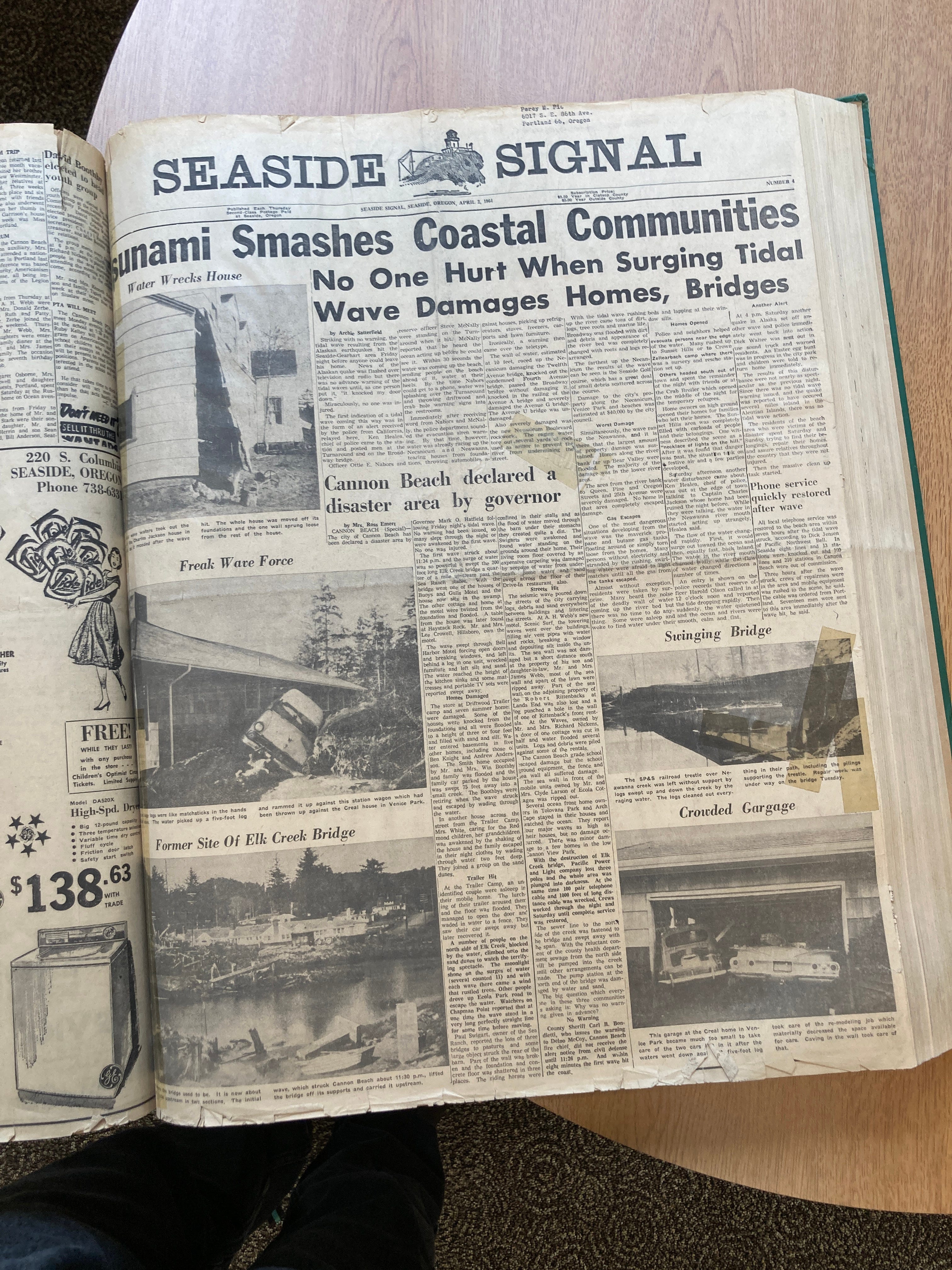
On Good Friday in 1964, Horning witnessed the power of the Alaska earthquake’s tsunami first-hand from his home. He described how the waves surged up the mouth of the river, splitting in front of the old high school and flooding the Neawanna and Necanicum channels; the Fourth Avenue Bridge was swept up against the First Avenue Bridge; water pouring into the parking lot where the Convention Center now stands. He remembered the Finnish meeting hall across from his home being torn off its foundations and logs trapped under the 24th Avenue bridge.
After graduation from Oregon State University, Horning hit the road chasing rocks and consulting with industry.
But his heart remained in Seaside and as tsunami science unfolded in educational settings around this world, his conscience knew the risk. This extreme vulnerability is not just a matter of proximity to the ocean. It is the result of a dangerous combination of local geography, low elevation, and historical development patterns. According to the state’s Department of Geologic and Mineral Industries, water can easily push deep inland, meaning that more than four-fifths of the city’s developed buildings are estimated to be within the inundation zone for a medium-to-large tsunami. Statistically, Seaside has the highest number of permanent residents and temporary visitors living or staying directly inside the high-hazard inundation zone along the entire coast. A state report indicates a significant portion of the city cannot reach natural high ground given the present-day road and bridge network.
Of course Tom knew the worst and he wasn’t shy about sharing casualty numbers when the Big One hit. Seaside is living on borrowed time, he warned. He pointed out that the city sits at the leading edge of a “seriously massive block of tectonic plate” and that more than four-fifths of the buildings are expected to be inundated by a medium-sized tsunami wave.
He gave a 90-minute presentation to the City Council in 2007 regarding substandard bridges, which ended with a councilor dismissively suggesting they move on to “more important things.” The words stung as he recognized head-on that reality hadn’t arrived in city hall. This exchange deeply angered Horning, fueling his ongoing mission to identify the nature and proximity of the hazard to justify using room taxes for infrastructure.
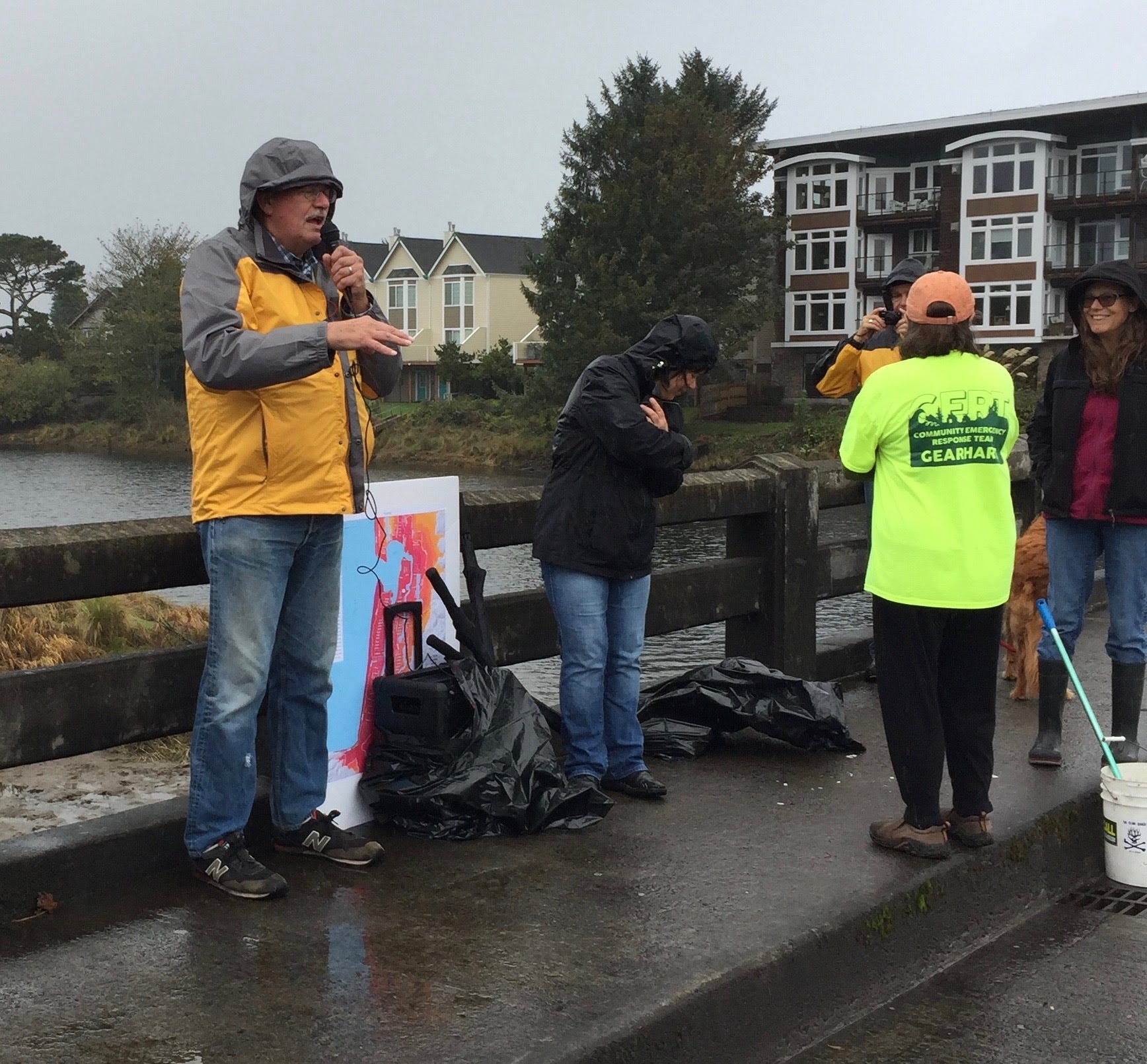
I covered his campaign when he ran for city council in 2016, standing on a bridge on Avenue G in a windswept rainstorm, his supporters’ signs buffeted by the gusts. Miraculously, Horning won on a one-issue platform: fix the bridges.
He argued that aging bridges at Avenues S, U, and G will likely collapse during the initial earthquake, leaving residents and visitors with only 20 to 30 minutes to find a way to high ground before the wave hits. To Horning, this was a simple, albeit grim, calculation: fixing the bridges reduces the fatality rate from a high number to a low number.
When an entrepreneur brought his two-seat RescuePod to Seaside for a demonstration, Horning’s reaction was one of cautious scientific curiosity. He encouraged the pod’s developer to “work the numbers” and suggested a public test in the Cove to see how the pod handled big waves and rocks. “I’d rather see a bridge,” he said later.
Horning’s commitment to real-time observation was evident during the January 2022 tsunami advisory triggered by an underwater volcanic eruption near Tonga. While many local leaders were coordinating beach closures from emergency centers, Horning stationed himself at the south tip of Gearhart to analyze the wave surges.
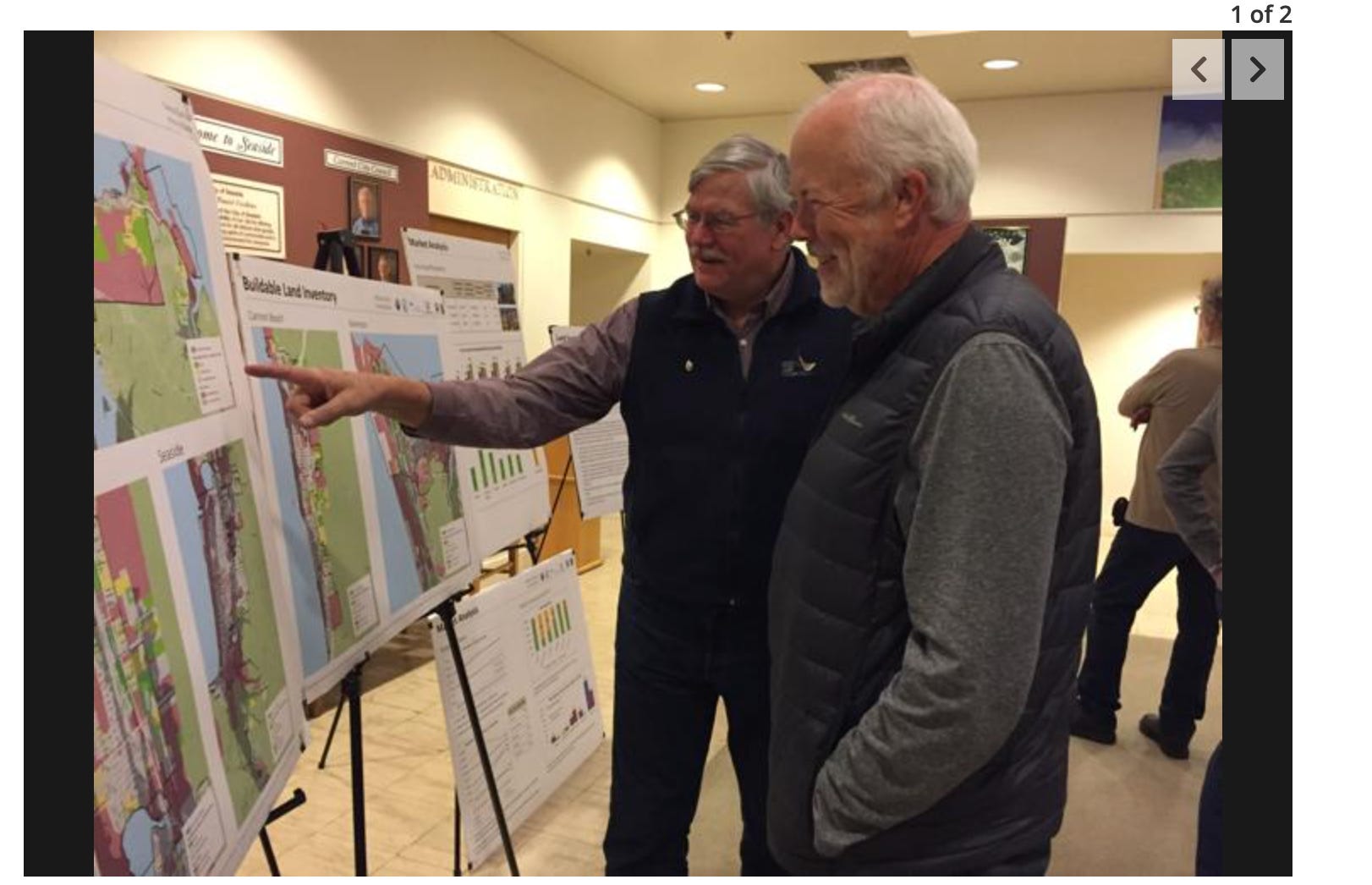
He often expressed a sense of urgency, telling me, “We can’t afford to be wrong and we don’t have much time.”
Tom always showed a deep-seated love for Seaside, tempered by the sobering reality of a geologist who knew the dangerous results of ignoring science.
The fact that we’re even discussing this topic now is a win for Tom. Enough people cared to support a 2016 school bond issue to build a new campus outside of the tsunami zone. Seismic risk is a factor now considered in every land-use decision on the north coast.
Tom had his frustrations — the lack of enthusiasm for bridges in Seaside, the slow slog of government, and the failure to support seismic rehabilitation for the vulnerable cinderblock firehouse in Gearhart, built in 1958 and likely to collapse in the event of an earthquake or tsunami.
Seaside never did allocate tourist funds to address tsunami awareness, safety and education, as he had hoped. Seaside has yet to develop a safe downtown evacuation site.
He was no Nostradamus — the date of his tsunami prediction on the wall of the Pacific Way Cafe (happily) did not come to pass. The clock, for the Cascadia Subduction Zone tsunami and quake, is still ticking.
Tom never stopped fighting for what he believed — it was better to be prepared than not — and even when a tourist fresh from the eastern colonies came to Oregon, ignorant in the ways of tsunamis and clam shovels, Tom never hesitated to spell out the story from scratch.
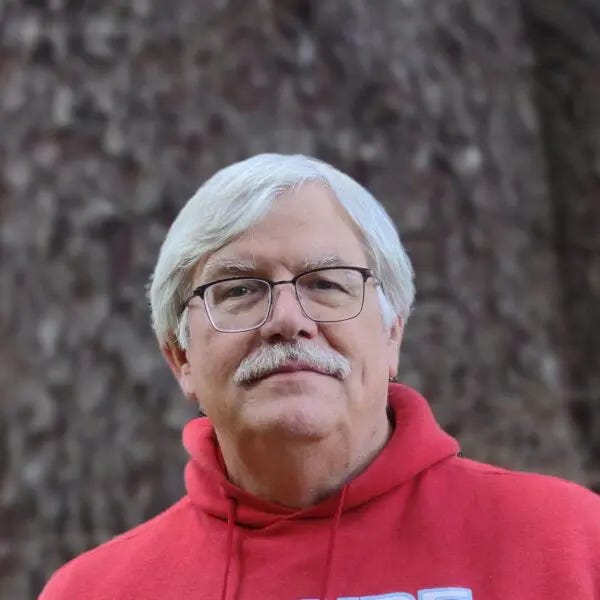
Thank you so very much RJ for this wonderful tale of our beloved Tom. We haven't even begun to realize how much we are going to miss him.
Thank you, RJ. A beautifully written tribute to a fine man and local treasure.