We are not OK
How political cynicism is destroying community

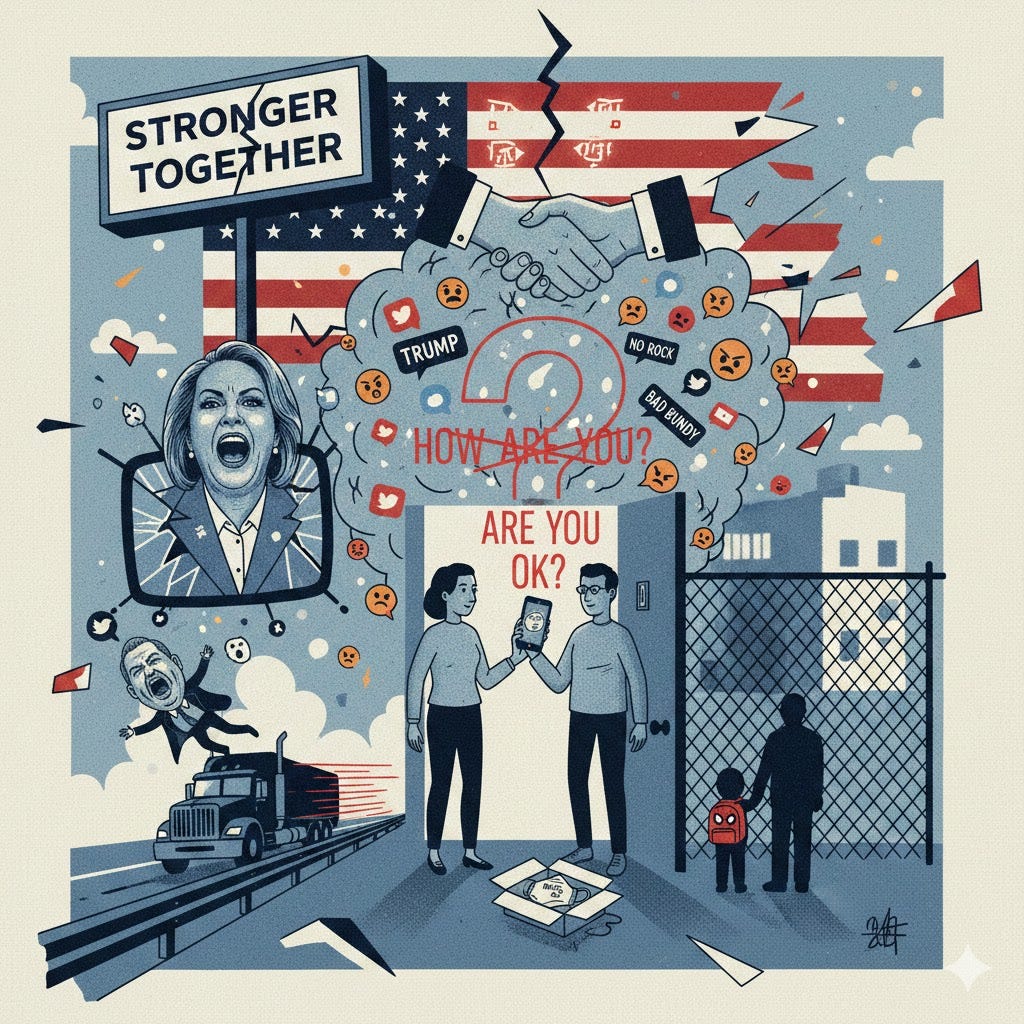
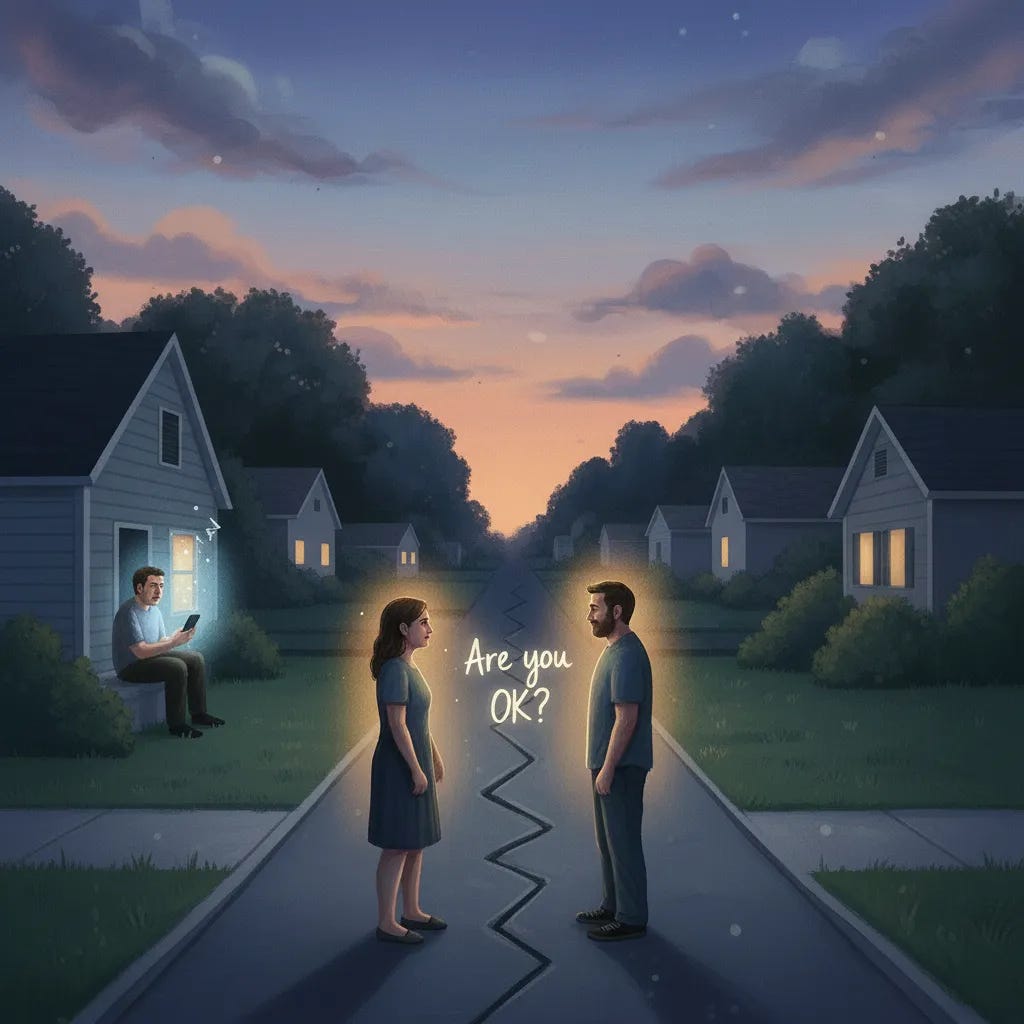
No wonder people are wary of answering the question “How are you?” The question should really be, “Are you OK?” People are at such a high level of stress and social media pheromones that they are at the trigger’s edge. Drivers, you know who you are, like the guy who hit 90 to pass a row of five cars on Highway 30 while a logging truck was barreling down from another direction.
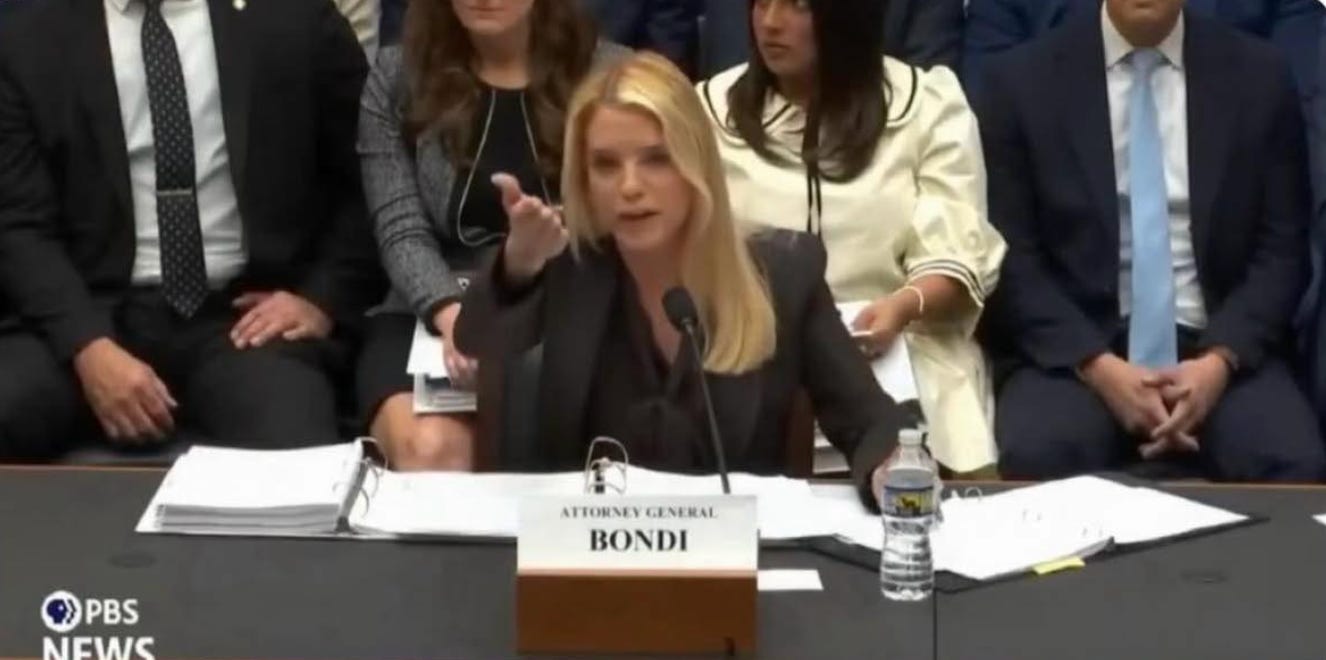
I think Pam Bondi’s wild screaming fit in Congress this week put things into perspective for me. If anyone is not OK, it is her. She epitomizes the ferocious, hit twice-as-hard, personalized attack mode so familiar today. We easily forgot what the hearings were even all about. (Which was the point.) Sometimes that combative performance backfires and leaves the actor — say, Rudy Giuliani, for one — looking even more ridiculous than before. It feels like proof of something deeper: a collective inability to regulate ourselves.
Politics today is the start and end point of relationships. We are so fearful, at introductions, of discovering an immediate and insuperable divide that can at best never be conquered and at worst emerge as a bitter and long-lasting negative encounter.
The long pause
A couple came to our door the other day. They looked nice but they asked if we had gotten a package. We had. We thought it was a dog collar we had ordered. They showed us a picture on their phone of the package they delivered. We hadn’t opened it so we unpeeled it while they stood in front of us. It was an N-95 mask. We hadn’t ordered it.
“We ordered a computer, and this is what came. I think we’ve been scammed,” they said.
I invited them into the house to exchange information. They admitted they were surprised we invited them in. After we talked a little about the high incidence of scams, the man said, given the state of the world, he was surprised we invited him in. “I’m not so sure if you came to my door I would do the same.” There was a long pause. He also said, “You guys seem normal,” and we all laughed. The information exchange completed, it was time for them to leave. We felt really good about them, but realized we didn’t really know if they were Team Kid Rock or Bad Bunny.
We’ve had a couple close calls lately where conversation has veered in an odd direction. For example, I was playing music last week and a guy in the audience asked me what kind of name is “Marx”? I flinched and answered “German.” He said, “That’s an unusual name.” I mumbled, “Not really.” He said he had read all of Karl Marx’s works. Then he mentioned “The Protocols of the Elders of Zion,” the antisemitic tract later used by the Nazis to whip up hatred. The book still resonates with some who buy into the theory that Jews run the world. By the way, he loved the jazz performance. Turned out he was a real fan and stayed for both sets.
There was another incident two weeks ago at a local brew pub that sent a shudder down my spine. I was having a beer; my wife was having a rum-and-root beer cocktail. We struck up a conversation with another couple sitting a few bar stools down. Everything was fine until the man mentioned he was “a conspiracy theorist.” My eyebrows shot up. The conspiracy didn’t involve Lee Harvey Oswald or Jack Ruby. It was whether John F. Kennedy had ever existed. I replied, “Well, I’m 70 years old, and I assure you, John F. Kennedy was a real person.” I had about an inch of beer in my glass and I asked my wife if I should order another round. “No,” she said. “Let’s get out of here.”
The cost of being ‘not OK’
Anyone can tell by the brutal and unfeeling comments on social media that people are not OK — and for many being not OK means they want you to not be OK too.
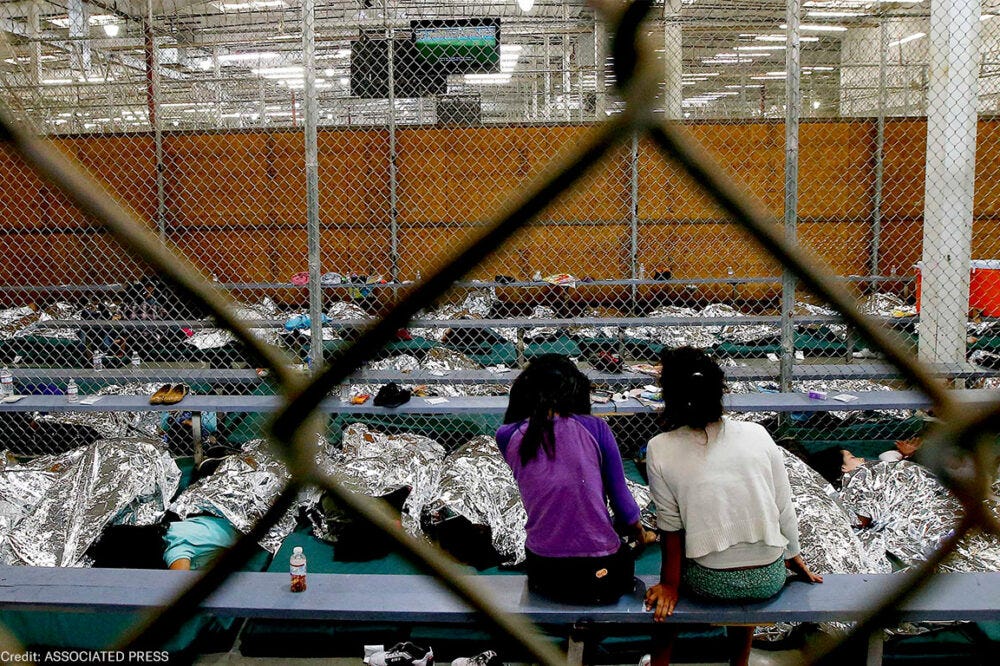
Consider those who are truly not OK.
The number of children in federal custody has climbed sharply since President Trump revived the practice of detaining families last year, as part of his promise to deport immigrants who are in the country illegally. According to a report by “The New York Times,” 5-year-old Liam Conejo Ramos, still wearing his Spider-Man backpack, was detained along with his father on their way home from school in suburban Minneapolis last month.
When Pam Bondi lost her shit in the performative congressional display that epitomized what we are all facing every day — if not in reality in our minds — it embarrassed me not for her but for all of us.
A different response
It is hard to imagine Americans ever coming together for a public holiday, the way millions once flooded Times Square for V-J Day, embracing strangers in a shared relief that the world was finally safe.
Today, the sign at our local Episcopal church reads “STRONGER TOGETHER.” My wife cynically asked, “What are we stronger together for?”
Are we better off returning to our corners, our personalized broadcast media, our YouTube sites, and locking the doors and pulling down the shades?
It takes a lot of guts to wear a “NO KINGS” pin these days, or put a “TRUMP” sticker on your bumper. Will we develop secret handshakes, secret codes, like “Pssst… Sydney Sweeney…” or … “I get my news from independent sources.” A ball cap versus a knit cap? Are you wearing a camouflage jacket ‘cuz you like the style, or…? Just vague enough that you’ll never know.
Now, you don’t dare ask. And maybe you don’t want to know.
It saddens me to say what a great piece this is. You nailed it describing our national malaise.
Like so many boomers, not exactly how we pictured our golden years. This is our fight, so we must resist, stand up for our freedoms and hope we have some semblance of free and fair midterms in November.
Depressing, but that’s the truth today.