The biker beat
Covering ‘Iron Horse’ pushing a Mickey Mouse stroller

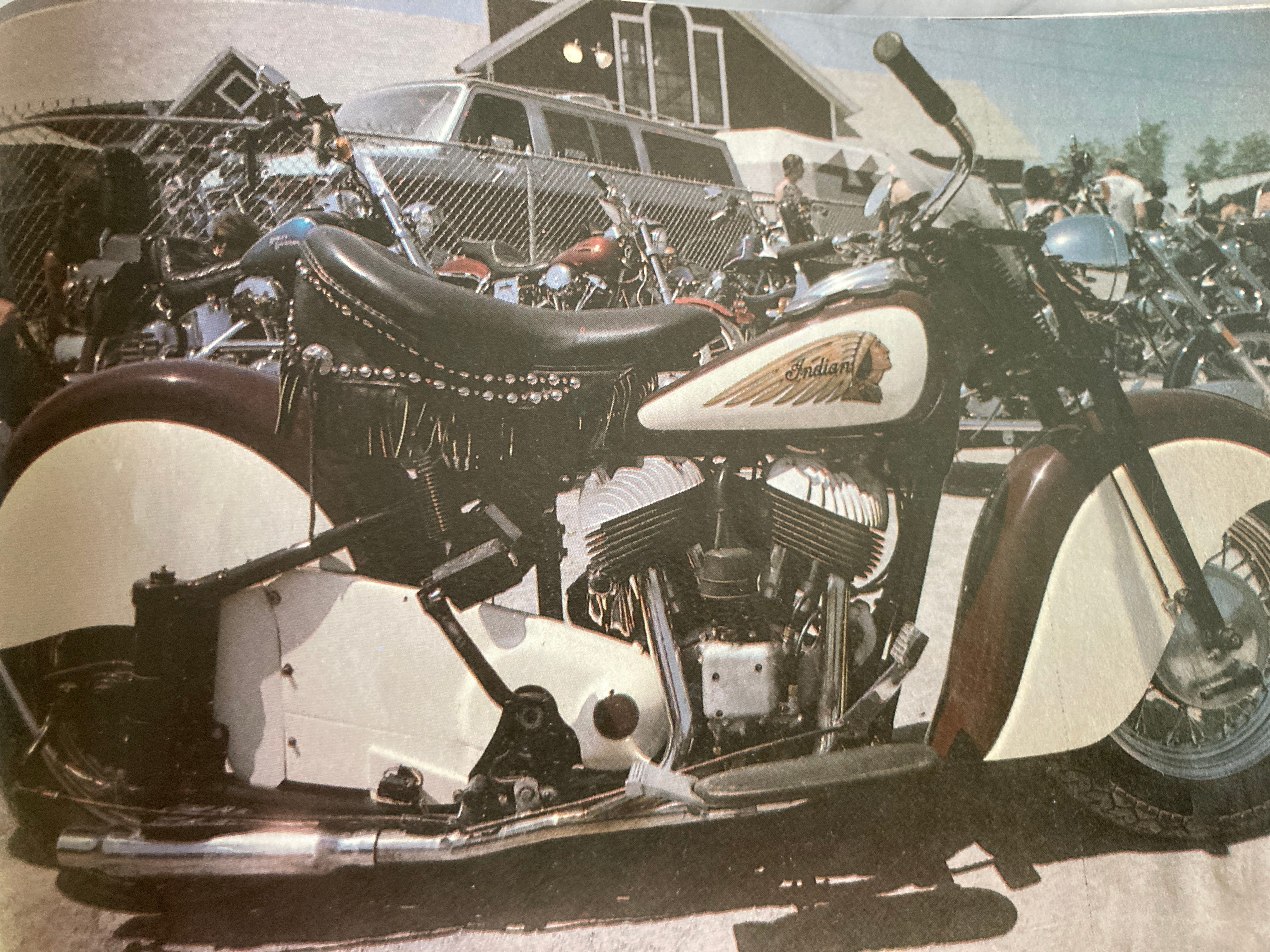
For a while I was writing pieces for niche publications, covering everything from tattoos to product reviews. They figure you can write about anything. One of those assignments came from a low-budget slick, a magazine with a formula of a motorcycle and a woman on the cover. When the editor — who edited six other titles I wrote for — learned that we were spending the summer in a cabin in upstate New York, I got a call.
The assignment was to cover Am-Jam.
We drove into the field in a 15-year-old BMW 2002, a maroon sedan that was probably the least likely vehicle in that vast lot. The American Motorcycle Jamboree was an annual rally at the Cobleskill Fairgrounds.
Holding my trusty reporter’s notebook, I walked onto the fairgrounds while we wheeled a toddler in a Disney Baby Mickey Mouse stroller through the rutted mud and gravel. We added our two little dogs — a shih-tzu and a Lhasa apso — to our journalistic caravan.
Only later did I understand what an absurd sight we must have been.
Every other dog in the place was a pit bull or a shepherd, chained or unchained, growling at our little poufs. Every other guy was in leather and every woman wore a crop top. The men were bearded and tattooed, the women tattooed and braless. The day was beautiful, there was the sound of a country blues guitar — Lynyrd Skynyrd provided the anthem then — and I had my best interviews near the hot dog truck.
What struck me, though I didn’t have the language for it then, was how ordinary it all felt. Bourgeois, even. Families. Vendors. Sunburn. Beer. A massive party in a field.
Of course, that wasn’t the version Hollywood sold.
The bad guys
The group at the Cobleskill fairgrounds was positively tame compared to the outlaw lifestyle immortalized on screen — motorcycle gangs subsidized by organized crime (or unorganized, in some cases), roaring into Main Street USA.
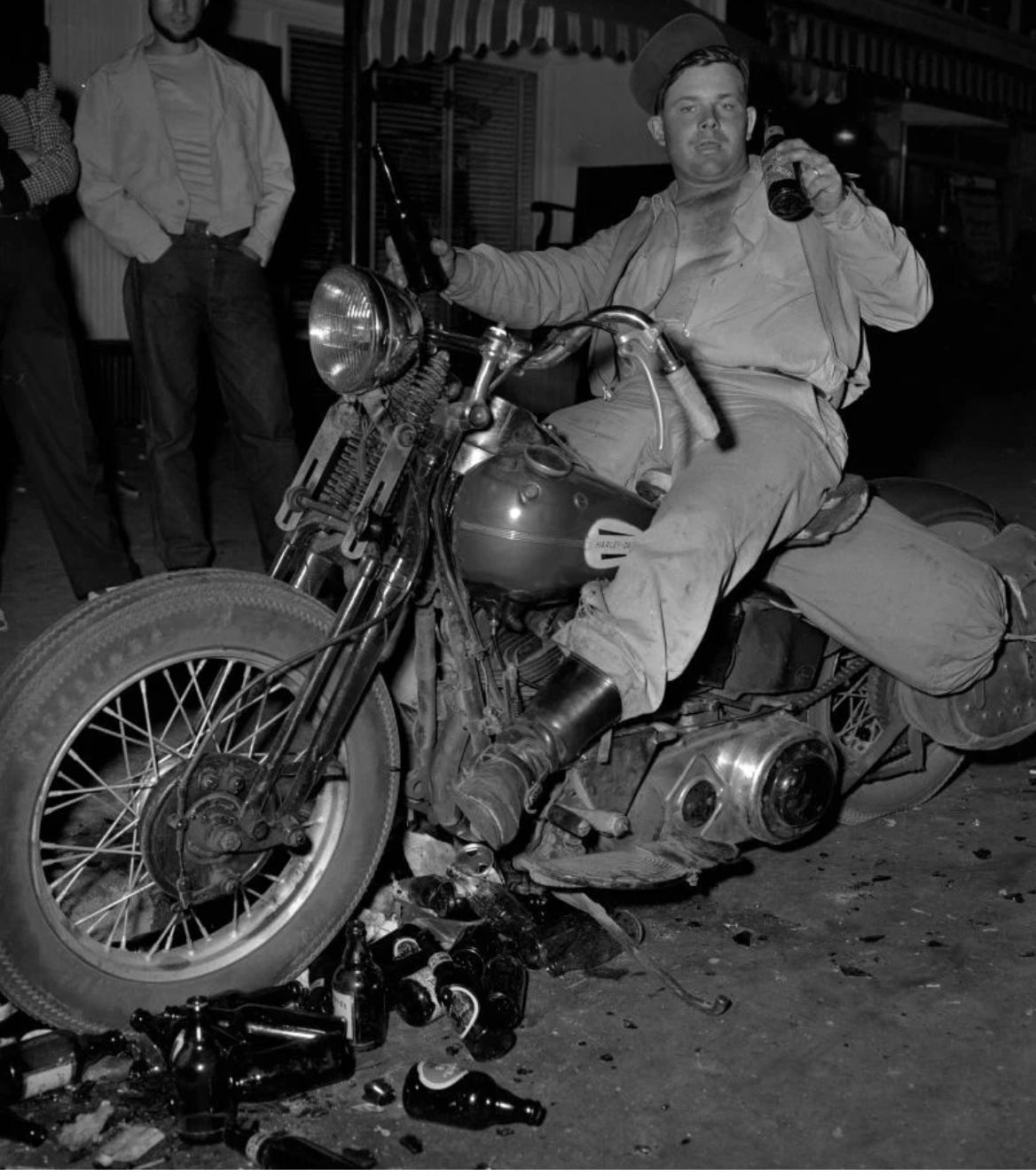
Hollywood’s biker genre drew from the Hollister Riots of July 1947, when thousands of motorcyclists — many of them World War II veterans — overwhelmed a small California town during an annual rally. What was largely a drunken weekend was sensationalized. A July 21, 1947, Life magazine photo of a man slumped on a motorcycle amid beer bottles sealed the “outlaw biker” image.
From the 1950s and the advent of “The Wild One,” through Roger Corman knock-offs and the classic 1969 “Easy Rider,” the bike became an extension of the male ego — or something bigger.
The movie’s star, Peter Fonda, said it plainly in a 1969 interview: “We dealt with motorcycles as statements, rather than gangs. … It becomes an idea, like a horse… it’s chrome, because the U.S. is chrome machinery.”
The outlaw biker became a stock character in B-movie knock-offs like “Motorcycle Gang,” “Drag Strip Riot” and “One Way Ticket to Hell.”
In that B-movie jungle where I found myself wielding a keyboard machete in the 1980s and 1990s, motorcycle movies were as ubiquitous as psycho killers, transgender thrillers, and cannibal dinner parties.
The promising independent producer Lori Levine contacted me and director Joel Bender to pound out a screen treatment designed to cash in on the craze. Bender’s idea was to have one biker gang kidnap a girl from another — the Helen of Troy story retold on motorcycles. I wish I could tell you it was another “Easy Rider,” but the project never got into second gear.
‘Motorized hoodlums’
When I moved to Oregon in 2015, I learned about a complicated subculture: the Jolly Jokers, Gypsy Wheelers, The Outsiders, Brothers Speed, and the Hell’s Angels.
Researching my book on the Seaside Labor Day riots — three years of violent youth riots from 1962 to 1964 — I began to understand how critical motorcycle culture was to those eruptions. Seaside’s main drag was filled with hot rods and bikers who spent hours “dragging the gut,” riding up and down Broadway to the Turnaround, drinking and partying to rock ’n’ roll from cruising convertibles.
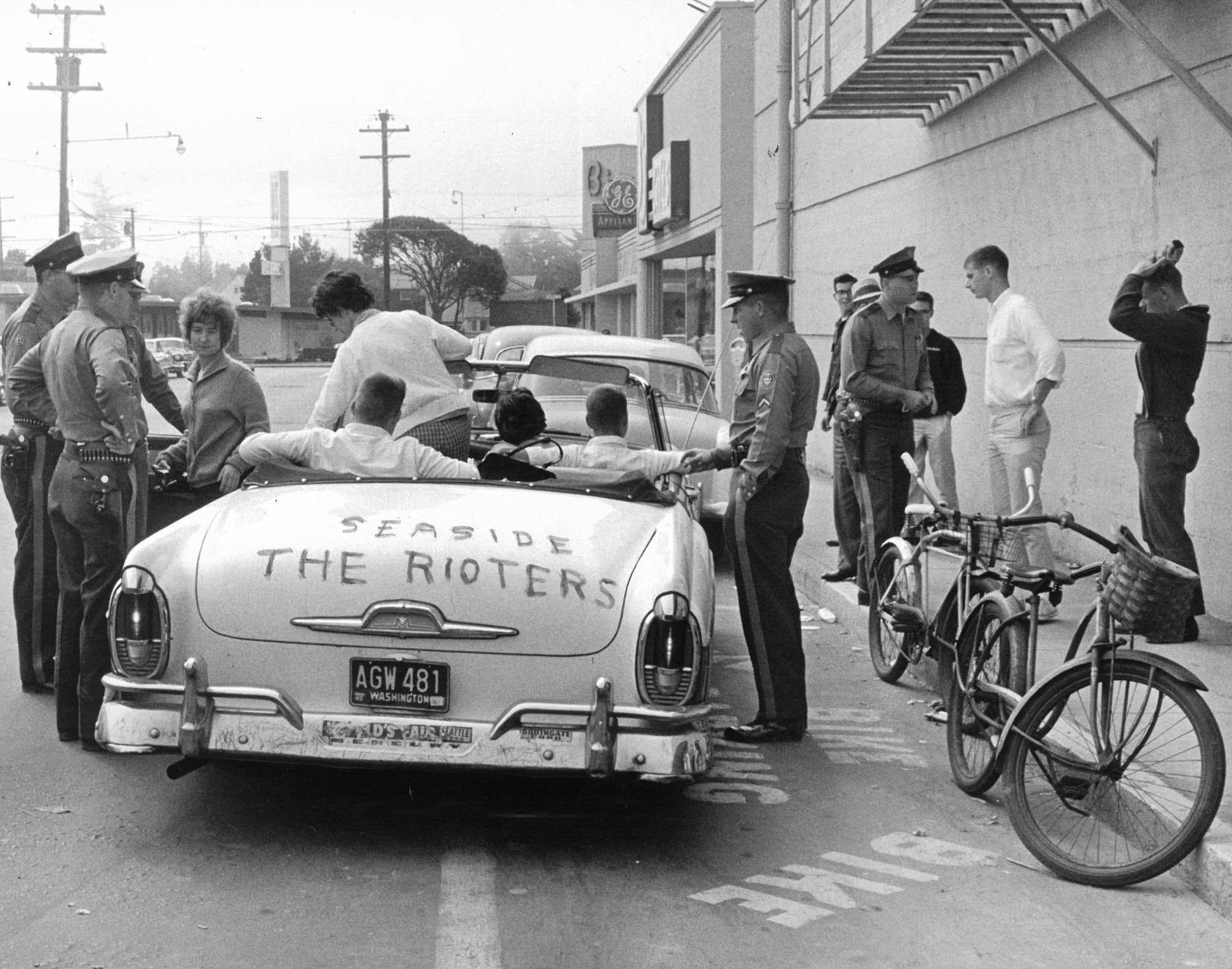
There were a thousand reasons the city erupted on Sept. 1, 1962. Among them were simmering disputes between bikers and car clubs. The “motorized hoodlums,” as they were dubbed in the press — in its coverage, the New York Times called them “ruffian cyclists” — traveled in groups before scattering at the sight of officers.
To deter “unruly” visitors, police selectively stopped vehicles on the highway — including motorcycles — for minor infractions like burned-out taillights to justify turning them away. One of the most violent confrontations of 1963 involved a motorcyclist who repeatedly circled the Elks Lodge shouting profanities at National Guardsmen. A guardsman eventually jammed his baton into the motorcycle’s front spokes to stop the rider.
We were reliving the Hollywood fantasy, but this time with boots on the ground. A clash between chrome and authority on the beachfront.
Bikers v. robots?
As time went by, the media image of bikers softened. The show “CHiPs” (1977–1983) followed highway patrol officers in aviators. Harleys were supplanted by razor-sharp Kawasakis. Tattoos? Everybody’s mother has them now.
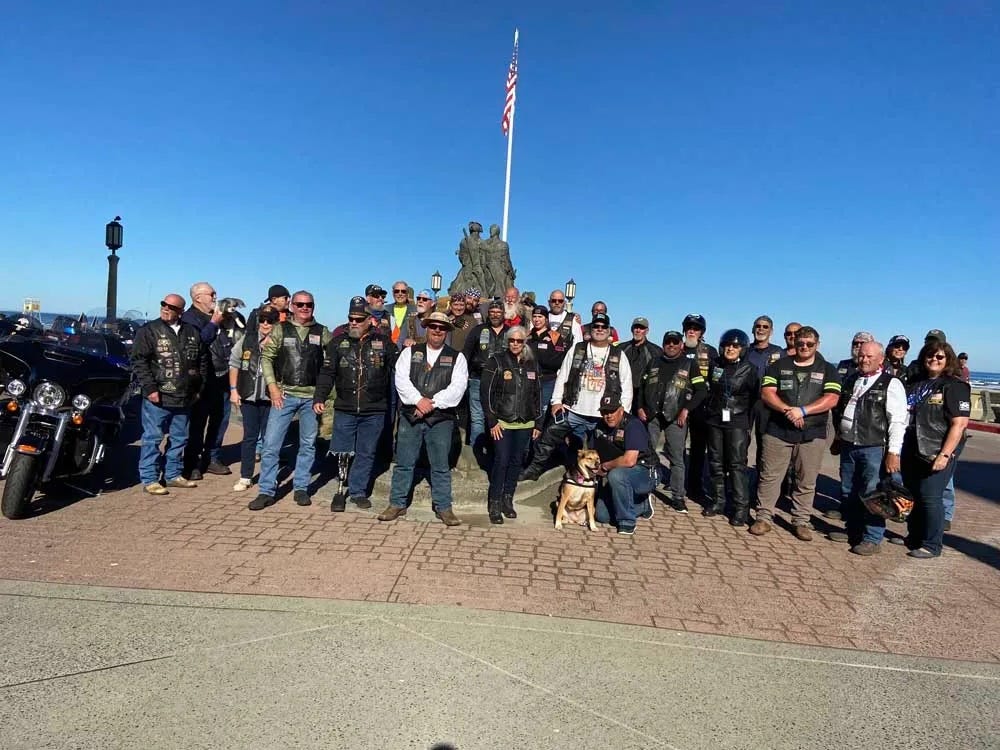
The bikers became the good guys, raising money on poker runs and memorial rides. The Oregon POW/MIA ride launched in 2020 when more than 80 motorcyclists rode to celebrate the renaming of the POW/MIA Memorial Highway, formerly U.S. Highway 26. Larry Moyer, a Navy veteran with the High Desert Eagles, told me that newly unearthed remains in Vietnam are providing DNA to identify the war dead, offering some closure to families.
Other biker groups ride for pediatric brain tumor research, breast cancer awareness and diabetes foundations. The image has morphed from brawlers to benefactors.
But somehow, in the writer’s imagination, the engine keeps circling back to outlaws and hell cats.
If I were a Hollywood producer today, I might pitch a film about robots on motorcycles — self-driving bikes run amok. Robot bikers vs. human bikers. Outlaws who suddenly become heroes as they save the world from programmed monster machines.
Maybe I’ll start working on the screen treatment. Hollywood is always looking for a good biker pic.
You are as much a historian as a reporter, my friend. Enjoyed this glimpse at yet another topic in your versatile range of subjects. And the robo-cycle idea is a good one!
As a born and bred Oregonian, I have abhored the biker culture. Rounding up a few stuffed toys at Christmas has never made up for the damage caused by the crime of drug distribution in the communities.