Pulp fiction
Learning to write at the 1970s school of Midwood Books

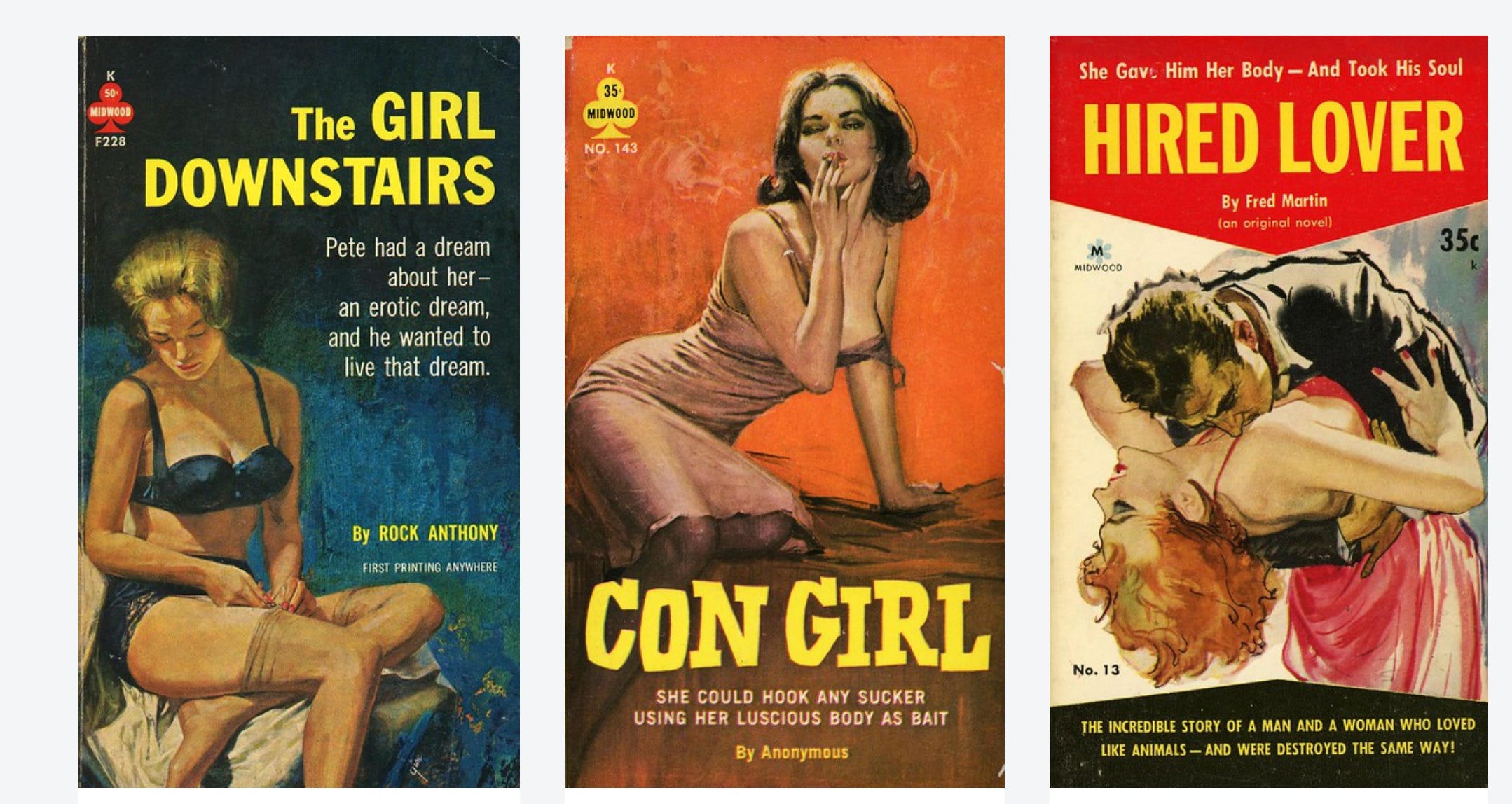
I entered the pulp fiction trade at the end of the era of pulp fiction.
The evolution of the pulp novel — as opposed to the literary novel, a very fine line if there ever was one — came with mass paperback fiction in the 1950s.
In 1957, Harry Shorten, a cartoonist who made his fortune with the comic series, “There Oughta Be a Law,” founded Midwood Books, named for his old neighborhood in Brooklyn. Authors — always hungry then, as now — included some real titans: sci-fi author Robert Silverberg, crime writer extraordinaire Lawrence Block and the prolific novelist Donald Westlake among them. A handful of writers of the day cranked out purple prose, most heavy on metaphor and adjective: “raging surf,” “throbbing lust,” and “cries of unbridled passion.”
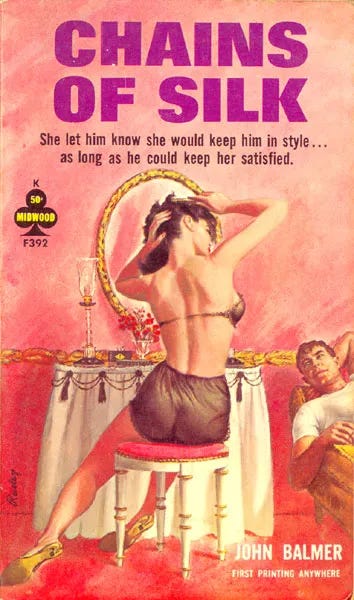
The covers are now collectors items, most famously, by artists Paul Rader, whose cover is above, and Frank Frazetta, sometimes called “the godfather of fantasy art.”
With each year moving into the sex-addled ‘60s, the books became more risqué. A 1965 New York Times article, “Pulp Sex Novels Thrive as Trade Comes Into Open,” paints a picture of a city of literate perverts.
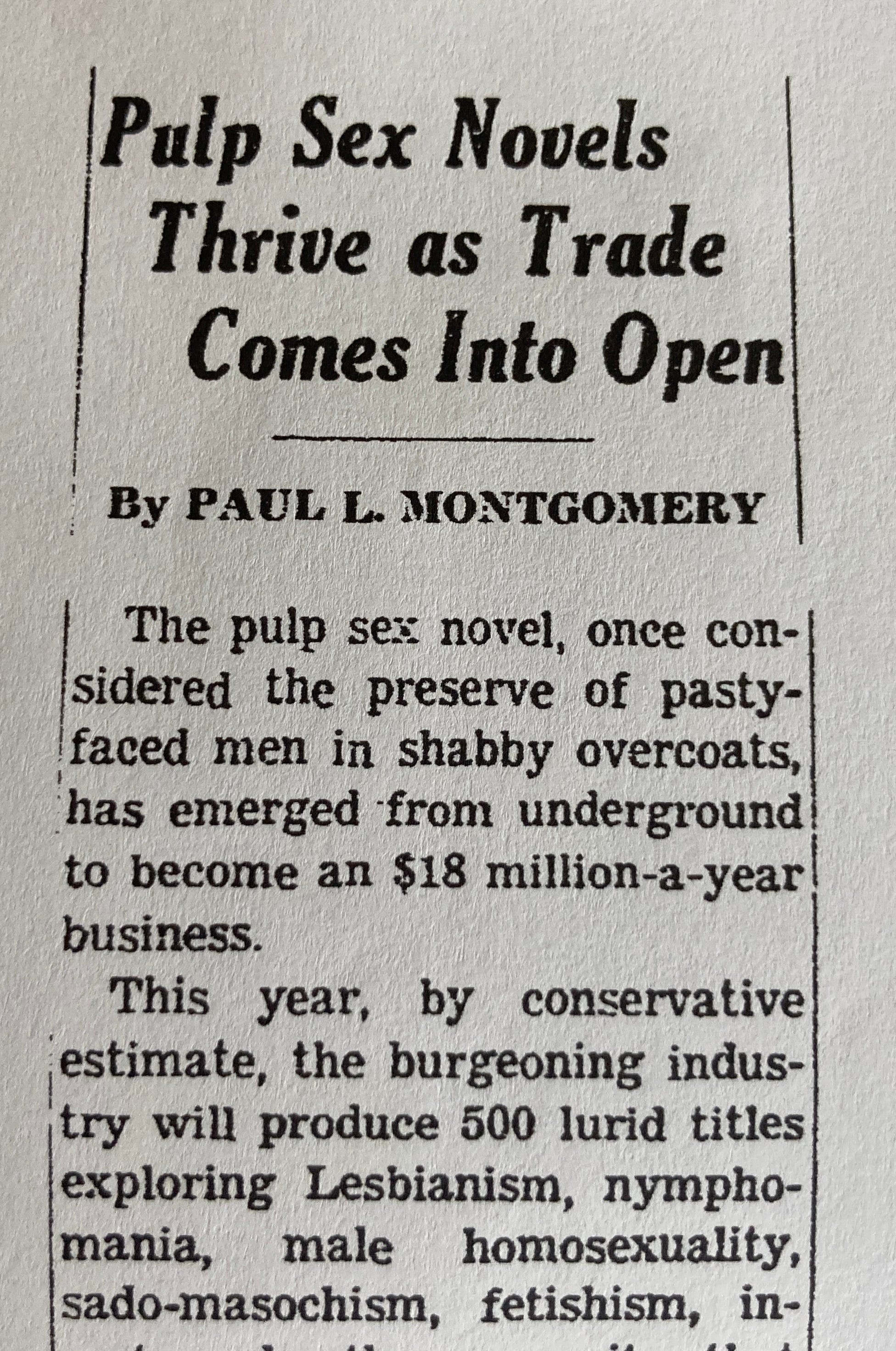
The influx of titles came as a direct result of a 1963 court ruling when New York State Supreme Court Justice J. Irwin Shapiro ruled that “pulp sex novels, while profane, offensive, disgusting and plain unvarnished trash still have a place in our society.”
Shorten expanded his title line in 1971 to form Belmont Tower. By the time I came along, almost a decade later, the Midwood division was limping along. The books from the 1950s and 1960s backlist no longer cut it in a world where “Deep Throat” was playing in legit Broadway movie houses.
The incredible Mr. Hanna
A wizened ex-PR man, David Hanna (seen below with Ava Gardner and Mearene Jordan, Gardner’s personal assistant) was entrusted with resurrecting the Midwood label. The idea was to pump out a handful of original fiction, sure. But with such a sizable library of titles, why not just rewrite them to fit the language of the day?
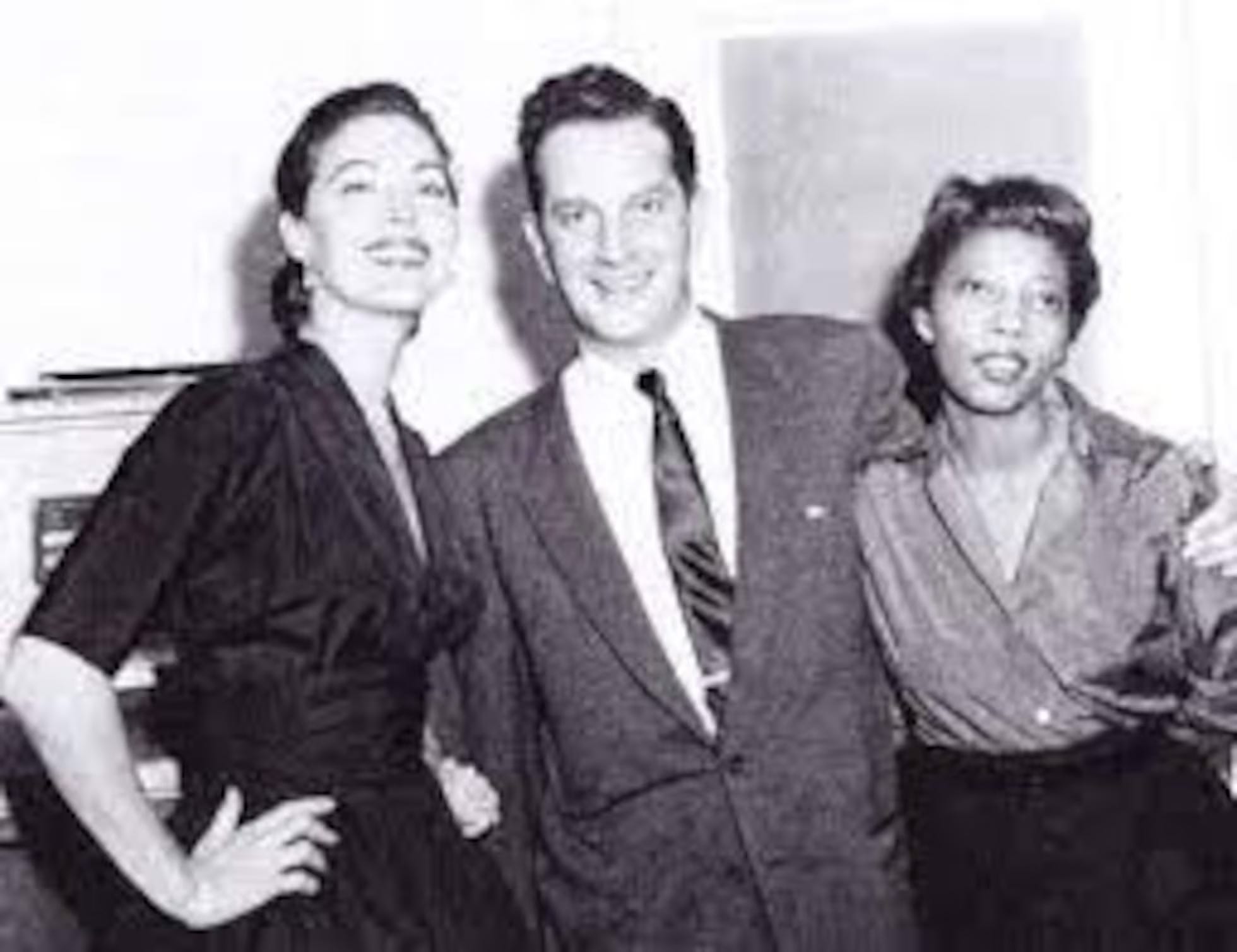
Hanna was from a different generation — in his 60s, maybe even older, all old people look alike when you’re 20something. He was gay in a time when gays were still in the closet, although I think he found the Gay Liberation Movement of the 1970s inspiring. In conversation, he reeled off tales of consorting with Ava Gardner — he was her public relations person, friend and confidant for many years. Most of his references were for people long dead or past their prime. He was so out of touch with modern culture that when we heard the news John Lennon was shot in front of the Dakota apartments on West 72nd, Hanna said to me, “Did you hear Jack Lemmon was shot?”
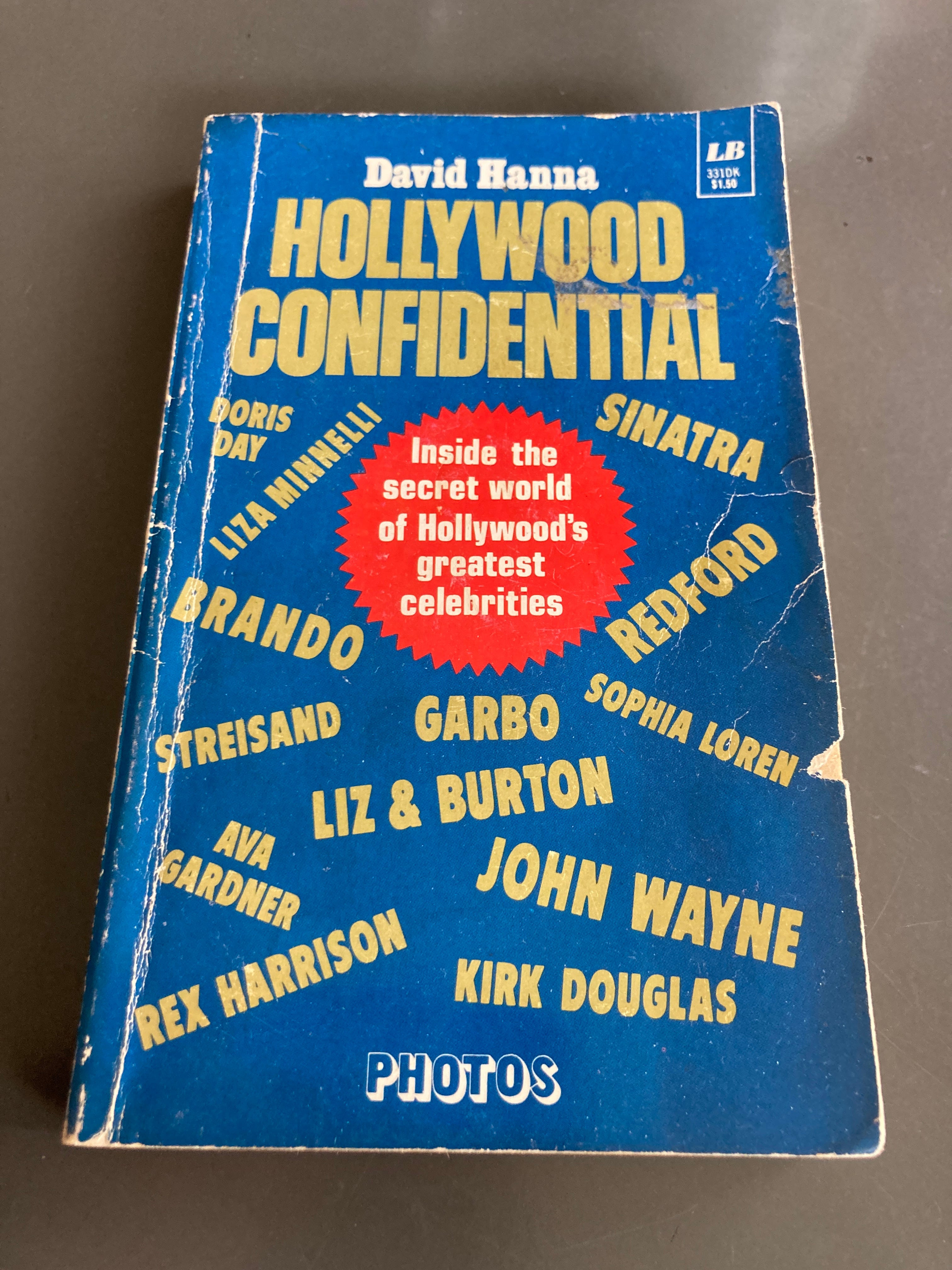
Hanna wrote “Hollywood Confidential” in 1976, a replication of the 1950s series “New York Confidential,” by columnists Jack Lait and Lee Mortimer. Hanna had no problem dishing the dirt, describing Ol’ Blue Eyes Frank Sinatra as “fat, puffy-eyed, bursting out of his tuxedo, faltering on the high notes, covering the embarrassment with rude jokes aimed at his enemies.”
He snarkily dissed the stunning, evocative Kim Novak — whose career faded early — as “in love with herself, immature and scared stiff. She did the smart thing — getting out of the rat race when she did, while her pride and money were intact.”
Even 1920s icons got the Hanna treatment, as evidenced in his chapter: “Rudolph Valentino: When it came to love, he preferred a plate of spaghetti.”
Rewrite man
I moved into Hell’s Kitchen in January 1978, age 23, a fledgling author in a third-story walkup across the street from May Mathews Playground, known for the infamous “Cape Man” murders decades before. I don’t remember how I found out about the gig with Midwood Books — possibly an ad in the back of the weekly Village Voice? Maybe from a conversation in a Ninth Avenue bar? I made my way up the elevator of the Park Avenue and 32nd Street building into the editorial offices of Midwood Books.
Or rather the desk of Mr. Hanna. Stacks of books, galleys, dummies, manuscripts and random stacks of who knows what accumulated from previous editors over three decades.
He pulled a few books off the shelf, with titles like “Living for Lust” or “She Knew What She Wanted.”
“We need five or six sex scenes,” he snapped. “And fix anything that seems awkward or outdated.”
After all the books had been written 20 years ago.
Keep the plots, he said, just “add sex scenes.”
What that meant was to pull the plush pompous prurient purple prose and translate into a series of hardcore four-letter words that would make a librarian blush. If the language didn’t have shock value, why bother? No beating around the bush, so to speak.
In the ’70s, the all-you-need-is-love generation was giving way to the wham-bam crowd, competing with hardcore movies and live sex shows on Times Square. You could walk into a peep show on 42nd Street and Eighth Avenue and watch a “live nude girl” pretty much do anything Philip Roth dreamed of when he wrote “Portnoy’s Complaint” in 1969. The city’s “massage parlors” offered everything but massage.
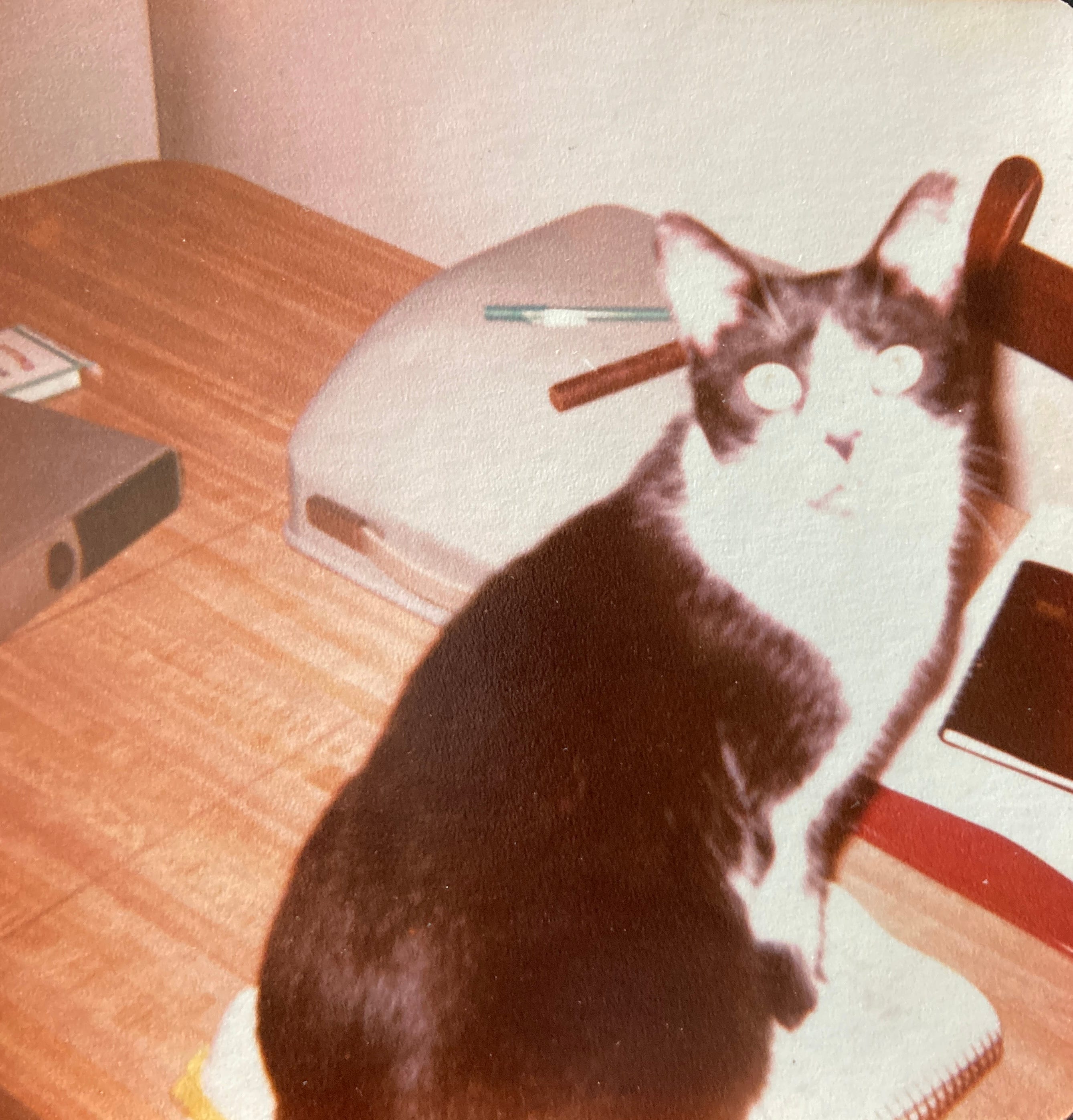
In churning out page after page on my Hermes 3000 manual typewriter on the kitchen table of my apartment (with Tippy, above, as companion), I would wrack my brain to uncover new verbs and transform old ones. By the time I was done pumping, thrusting and grinding, sex inevitably sounded like a trip to the hardware store.
With stock photos of comely models as covers, the books could be — and were — sold at airport bookstores and kiosks around the country. You could buy them at newsstands alongside Investor’s Daily and Car and Driver.
For a facile typist such as myself, the $4 a page assignments were top dollar — I could pull in $1,000 a week if I put in the time — not bad, considering the monthly rent on my West 46th Street studio apartment was $175.
I was one of a very few writers cranking out the titles — another was Lee Server, a guy about my age who cranked out some 35 or 40 books. Lee, David Hanna and I were probably the only ones left writing at that stage in the company’s history. We passed pseudonyms around like candy, stepping into venerated Midwood personae like Doris Holladay and Jason Hytes. I added a few names of my own to create the alter egos of Earl Arno, Cesar Fontana and Maria Lemans.
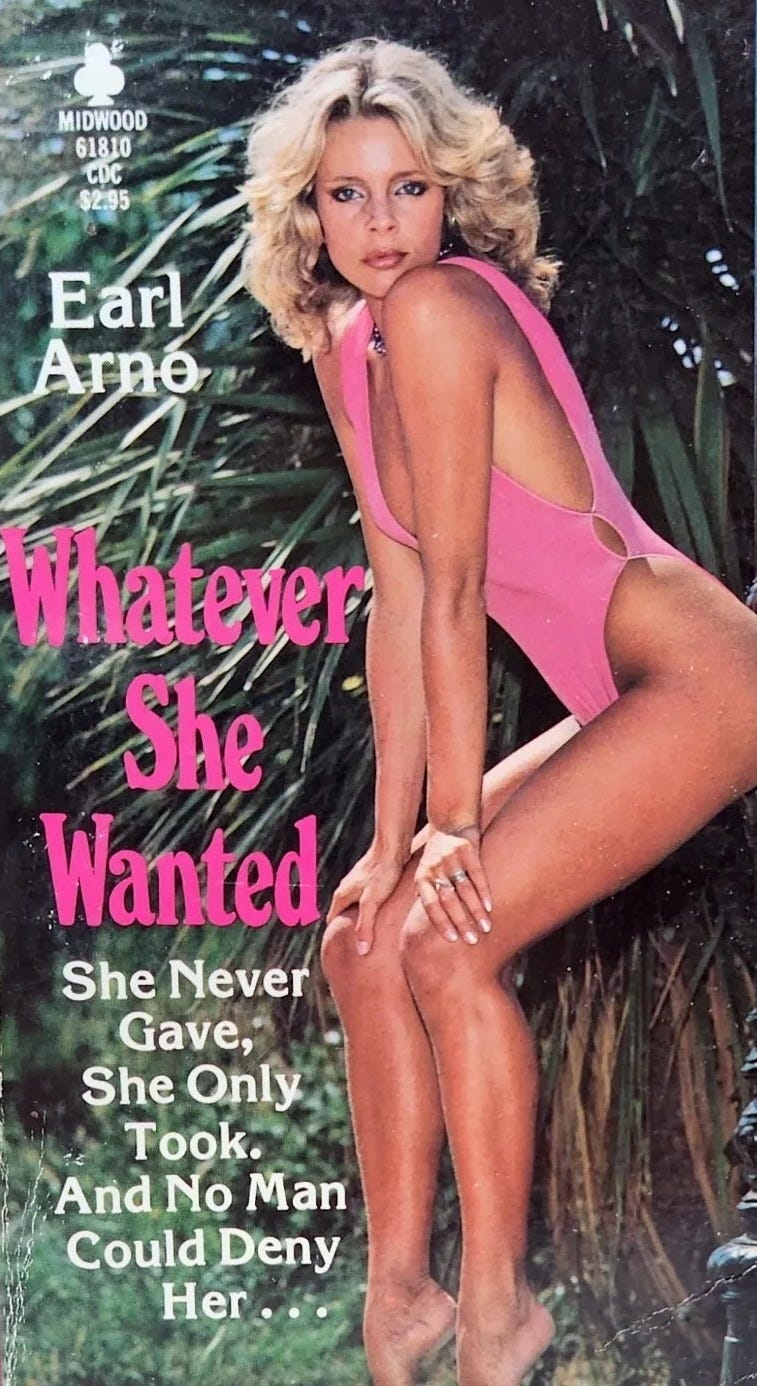
At some point, when he was satisfied that I could successfully modernize the 1950s Midwood classics, Hanna entrusted me with two original novels. As a young writer, I was eager to transcend the genre and write something meaningful: “Sex Games.” The story is a cutting contest between two men eager to prove their prowess.
I was thrilled when the crusty Screw Magazine book editor Michael Perkins selected my book for a review. And what debut author could hope for a better verdict:
“What makes ‘Sex Games’ the best stroke entertainment around is the author’s lighthearted inventiveness in spinning out his story and the unusual care — for the genre — he gives to characterization and dialogue. While it’s nothing to take seriously, it stands head and shoulders above most of the stroke fair on the racks. It’s good to see Midwood Books turning out a superior product.”
In my second original, “Hot Repair Girl,” I used my experience as a computer operator to tell the story of a female computer repair person and her adventures on her daily calls. I would venture to say it was the first sex novel of the modern computer age.
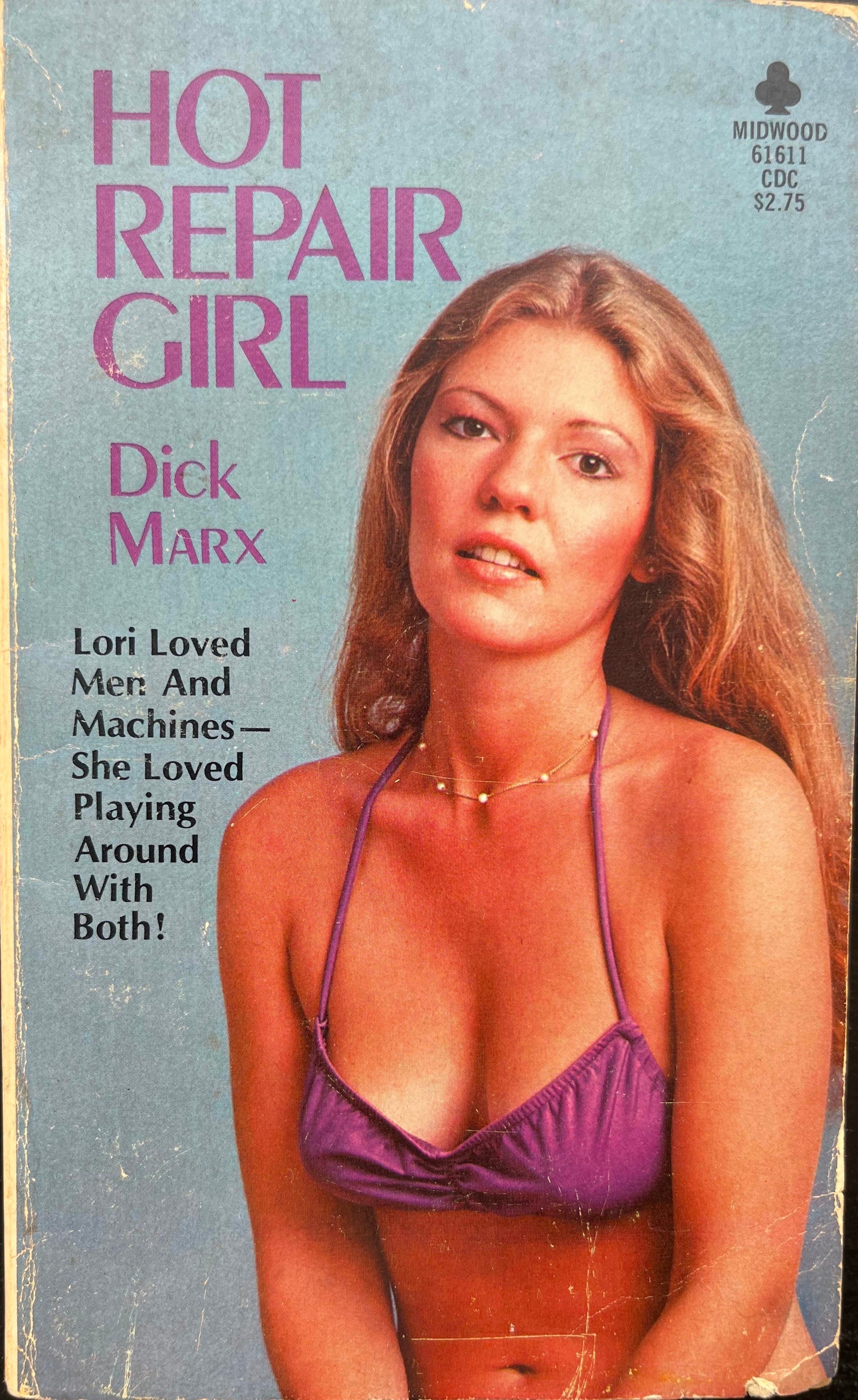
Critic Perkins again was kind, although I couldn’t help but laugh (and writhe) at his comment: “Hemingway would turn over in his grave at the travesty a strokebook writer like Marx can make of simple prose.”
Nevertheless, he again concluded “Hot Repair Girl” was a “superior strokebook that is guaranteed to get you off.”
Take that, Papa Hemingway!
Written in the wind
Harry Shorten retired in 1982 and the company was acquired by Dorchester Publishing, which changed its focus to horror titles; the publisher closed down in 2010. I lost touch with David Hanna, but Variety published his obit in 1993. Listed there was his work at CBS Radio, the Hollywood Reporter and New York Times. Lee Server, my fellow Midwood author, followed in Hanna’s star bio footsteps, writing “Ava Gardner: Love is Nothing,” in 2006. The L.A. Times called it “the film biography of the year.”
Sadly, Server died in 2021 at age 68.
The first videocassettes and Betamax tapes arrived in the mid-’70s, as did cable TV and pay-per-view. With the availability of actors and actresses performing for viewers in the privacy of their own homes, the platform radically changed. A picture, literally, was worth a thousand words. The moving picture changed the way people consumed their fantasies, just as the computer would do a decade or two later, and as artificial intelligence will do within the next five to 10 years, if not sooner.
Midwood and Beeline were the last of the medium. And with the speed of a cultural tornado, so too vanished the peep shows and loops, the 99 cent porn triple-feature on the Avon or the Venus on Eighth Avenue.
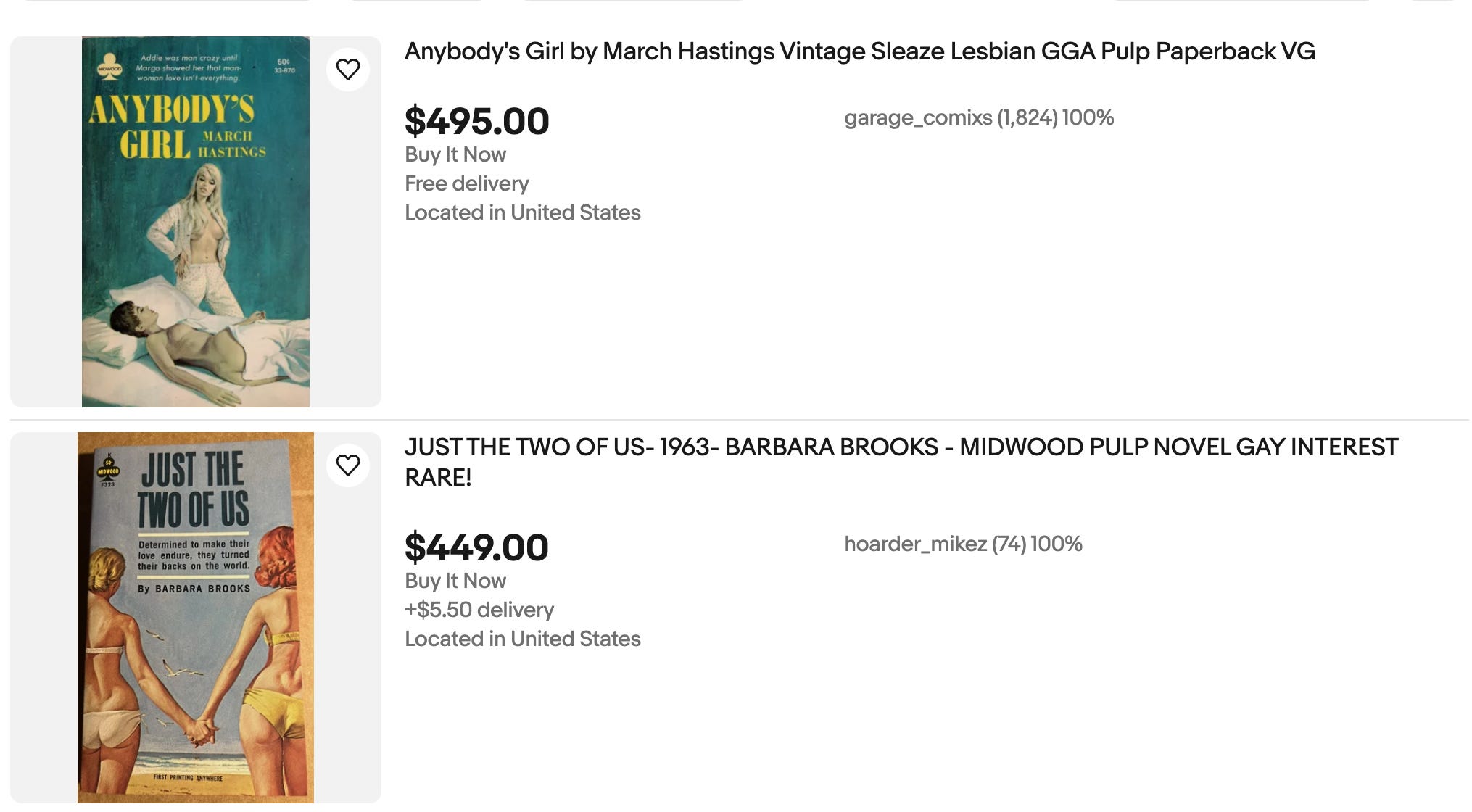
Today the books, if they can be found on eBay, Amazon or collectors’ sites, range from a few dollars to hundreds of dollars for more desirable titles and artwork.
As for the lasting effect on my writing, I’m sure Hemingway would still twist and turn at some of my poesy, pretense and peregrinations. But I can faithfully say that the forced churning of words on paper eliminated any future sense of writer’s block, no matter the genre, no matter the format.
Ha ha ha, poor Hemingway.
I remember the cover art well in my youth.
Could indeed be a film.
Nice piece!
Another very enjoyable piece, Rick! As you know, I wrote for an even lower rung sex novel publisher than Midwood, and I used to wonder what went on at Midwood. Wondered if I could make the grade at Midwood, and studied a few sample books I'd picked up. Sorry now I didn't try due to a lack of self-confidence, because I think I could have contributed too if there was any room in that small Midwood group for yet another hungry scribe. David Hanna sounds like a colorful character to have known, with his Hollywood background. After reading your piece, I googled Hanna and even found a Wikipedia entry. I'd love to find his Ava Gardner book, or his Hollywood Confidential. And if I had worked at Midwood, the friendship between you and I would probably have started sooner, no doubt, an additional benefit! In any case, your piece illuminates a vivid slice of writerly history for those who weren't on the scene at all.