Arrest and escape
Part 3: The incredible, mysterious Harry Alan Towers

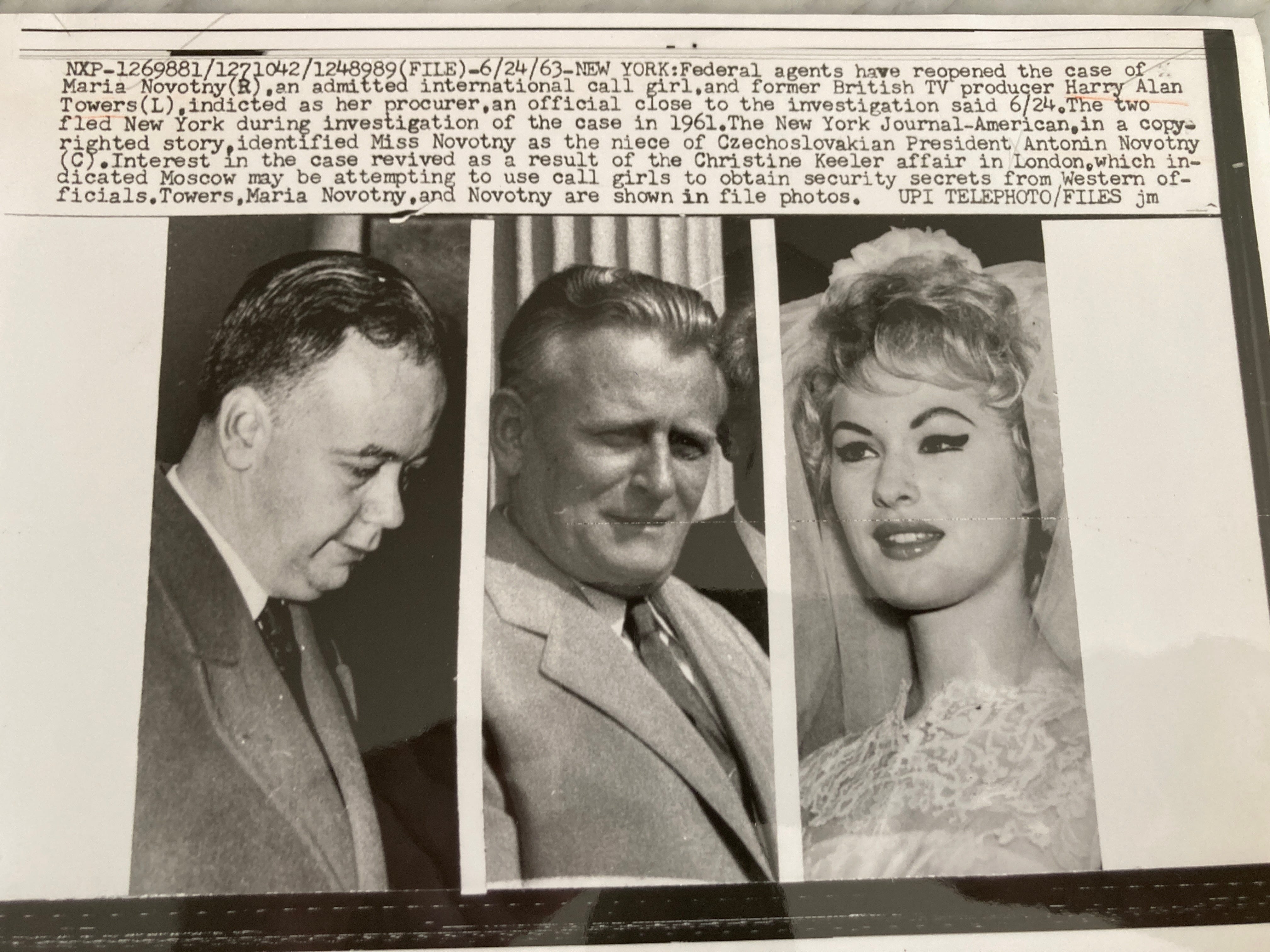
On March 3, 1961, a New York City detective made an appointment to see Mariella Novotny. Novotny, only a few months before her 20th birthday, had already lived an incredible life — leaving home to dance at London’s dives and later, posh clubs, hoping for a modeling career and a boost from film producer Harry Alan Towers, who brought her to New York.
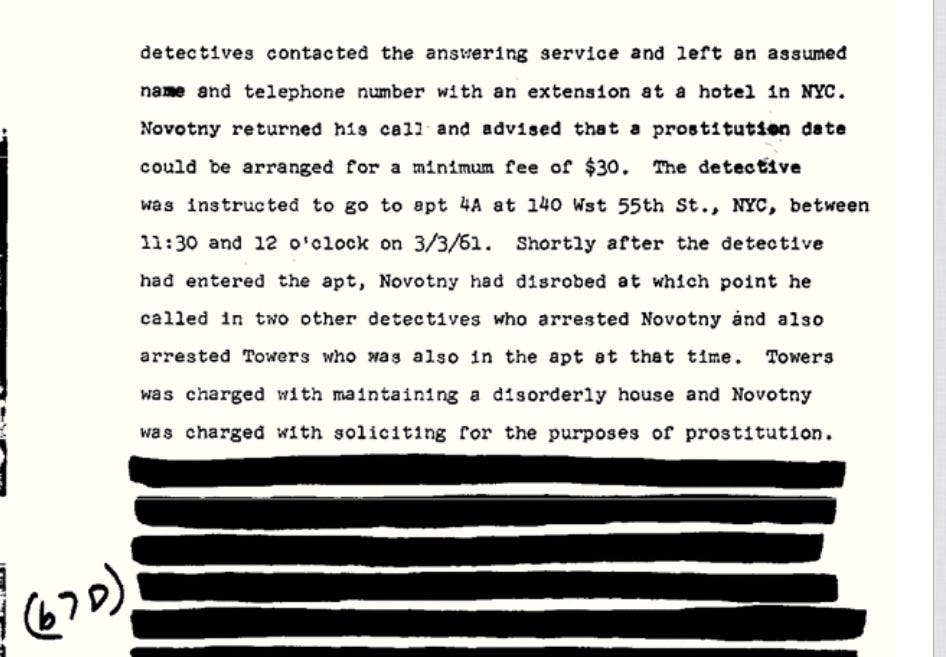
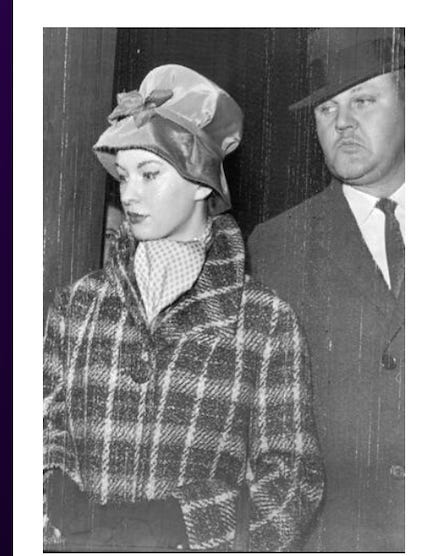
According to FBI documents compiled in 1963, a “prostitution date” with Novotny could be arranged for $30. Shortly after the detective had entered the apartment, Novotny disrobed, at which point he called in two other detectives, who arrested Novotny and Towers.1
“I got into trouble through my own stupidity,” Towers said, as reported by blogger John Simkin in a compilation of sources. “I was in the other room writing a screenplay. She came rushing into the room — she wasn’t living with me then, she'd asked if she could come up to meet somebody — I was busy working when she rushed in naked and said there was a policeman in the other room.”2
Three days later Towers was charged with violation of the White Slave Traffic Act, alleging that he had transported Novotny from England to New York for the purpose of prostitution.
In a statement made to the FBI, Novotny claimed that: "Towers took me to the Great Northern Hotel ... The following afternoon Towers brought a prostitution date to me, who paid me $40 to commit a sexual act. Thereafter I entertained prostitution dates regularly and earned approximately $400 a week. I gave Towers about $300 of this money."
She provided detailed lists of madames and prostitutes who had arranged dates, or gone on threesomes with her — all, she claimed, introduced to her by Towers.
Novotny also told the FBI that "Towers was a Soviet agent and that Soviets wanted information for purposes of compromise of prominent individuals."‘
In his autobiography, “A Life in Show Business,” Towers provided a different interpretation of what happened: "I had an affair with her (Mariella Novotny) and didn't know she was a hooker. Our total involvement was that she joined me in New York and lived with me in a couple of hotels.”
“On that fateful evening I mentioned earlier, Mariella called me and asked if she could meet somebody at my place. I was very busy, but I agreed anyway. Big mistake!
“I was sitting at my typewriter working away when the door to the office burst open. Mariella, stark naked, screamed that she had been arrested.
“When I talked to the detective from the vice squad, who was making the arrest, I naturally told him that the lease on the apartment was in my name. As we all left the apartment together, Mariella was greeted by a man I had never met. I learned later that it was her husband, Horace “Hod” Dibben, a somewhat shady art dealer, whom Mariella was living with at Essex House on Central Park South. I assume that he followed her to New York, when he realized that she would be staying there. Quite overwhelmed and confused, I thought it best to call my attorney before making any kind of statements.
“Mariella was accusing me of importing her into the U.S. for immoral purposes, as well as that I was living off her earnings as a high class call girl. In reality, she used those earnings to keep her husband in the money.
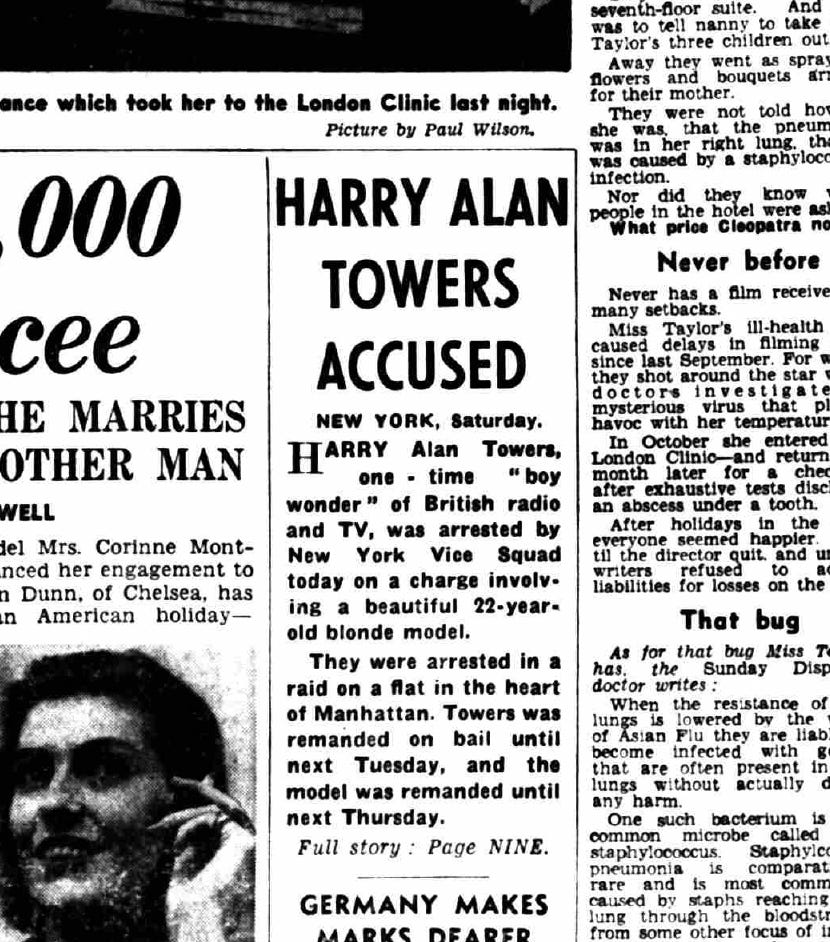
Towers was held on $10,000 bail and incarcerated in the Manhattan House of Detention for lack of bail until his hearing on March 7, the FBI reported.3
Novotny was released on $500 cash bail and indicated “a desire to cooperate with authorities.”4
Towers, he wrote, was “scared out of his mind” in jail, a “veritable hell on earth.”
Despite “being desperately upset,” he set down to write. Within a week, his agent, David Higham, sold Towers’ memoirs to London’s News of the World for $50,000.5
Towers’ bail was reduced to $5,000 and he was released a week after his arrest.
On March 6, Towers refused to be interviewed by special agents of the FBI.
“My arrest made the headlines in New York. It was even worse in London, where my name was much better known. It was when I was first charged at the precinct station and I was asked to remove my belt and braces to avoid any opportunity of a suicide attempt and led to a cell for the few remaining hours of the night that I began to fully realize the desperate situation I was in.”
Escape from New York
On April 12, 1961, Towers was indicted by a New York grand jury on five counts of the White Slave Traffic Act. His case was scheduled for April 25, at which he could plead to the charges.6
His mother Margaret joined him in New York and helped arrange his defense.
Prosecutors asked bail be increased on Towers to $25,000 “because it appeared that a large number of influential and wealthy persons would probably be interested in having Towers leave the country rather than face charges and incur embarrassment to these associates of Towers.” The judge refused and Towers was released after posting bail of $5,000. Trial was scheduled for May 16.7
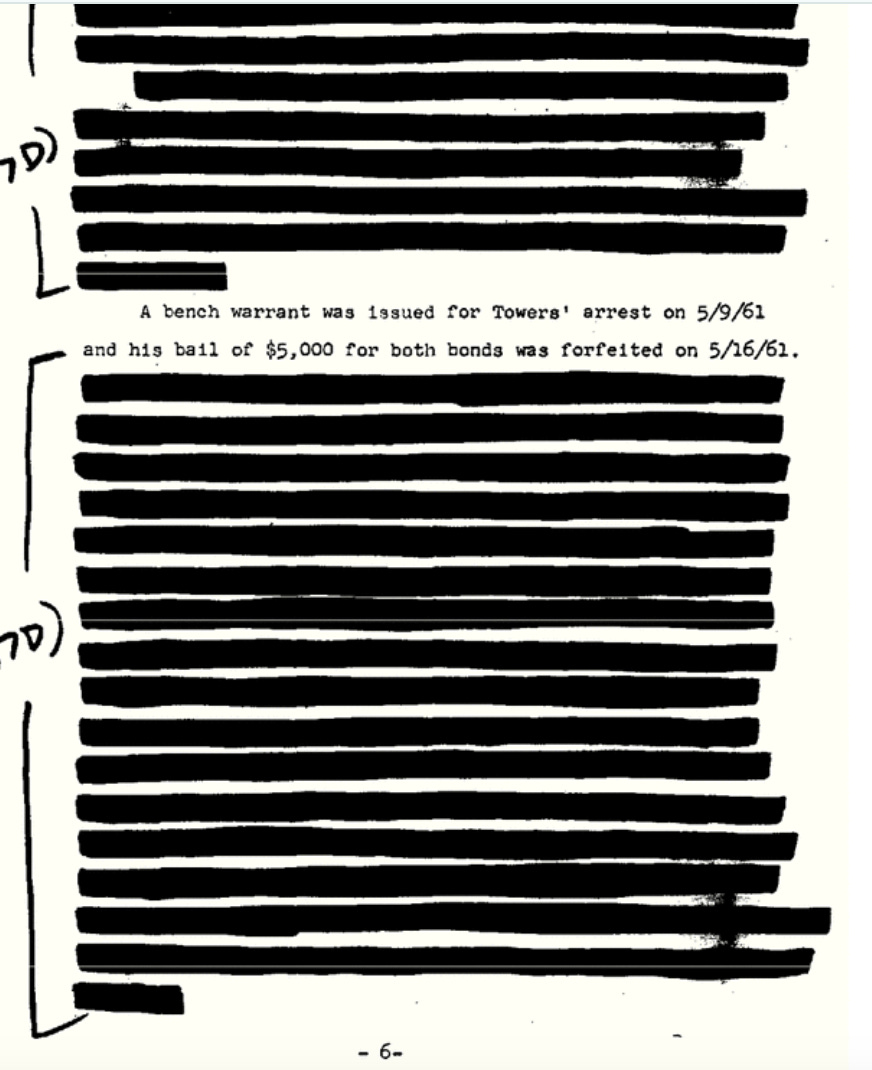
Fearing the trial would leave him penniless and ruined, Towers decided that his only option was to drive across the New York border into Canada and take a plane to Europe. He flew to Copenhagen where he gave a final interview to News of the World before catching an afternoon flight to Moscow.
Why Moscow?
According to Towers in his autobiography, he wanted to travel on the Trans-Siberian Railway across Russian and write about his experiences. “The official friends I met in Russia tried to discourage me from even attempting to take that trip.”8
The trip never happened. On a visit to Stalingrad, he was recognized by the Moscow correspondent for the Daily Mail, Victor Louis, who broke the news of Towers’ whereabouts. The world press picked up the story and accused Towers of being a Soviet agent.
“I was quite the opposite of that,” Towers said, “but had to stay silent.”
A bench warrant was issued for Towers’ arrest on May 9 and his bail of $5,000 was forfeited a week later.
On the Queen Mary
Meanwhile Novotny sold her story to the New York Journal American.
In a memo marked “SECRET,” the FBI wrote, “It would appear that the NYJA is being duped by Novotny an prints the lies which she has told them or the paper is taking ‘journalistic license’ in keeping an attempt to keep the story alive.
In May, Novotny, identifying herself as a visitor, occupied a first-class cabin on the Cunard Line’s Queen Mary back to England, traveling under the name of Mrs. R. Tyson. Her identify was soon revealed and she identified herself as Maria Novotny.
Since she was a British subject she was permitted to leave the ship on June 4 at Southampton, where she was met by her husband Horace Dibben and her mother, Estelle Capes. Her story was front page news, a British tabloid, with readers eager to hear of her activities in the U.S. with Towers and her escape.
The FBI concluded Novotny was “obviously aided by persons unknown to leave the U.S. as she didn’t have the brain power nor the money to execute her departure scheme.”
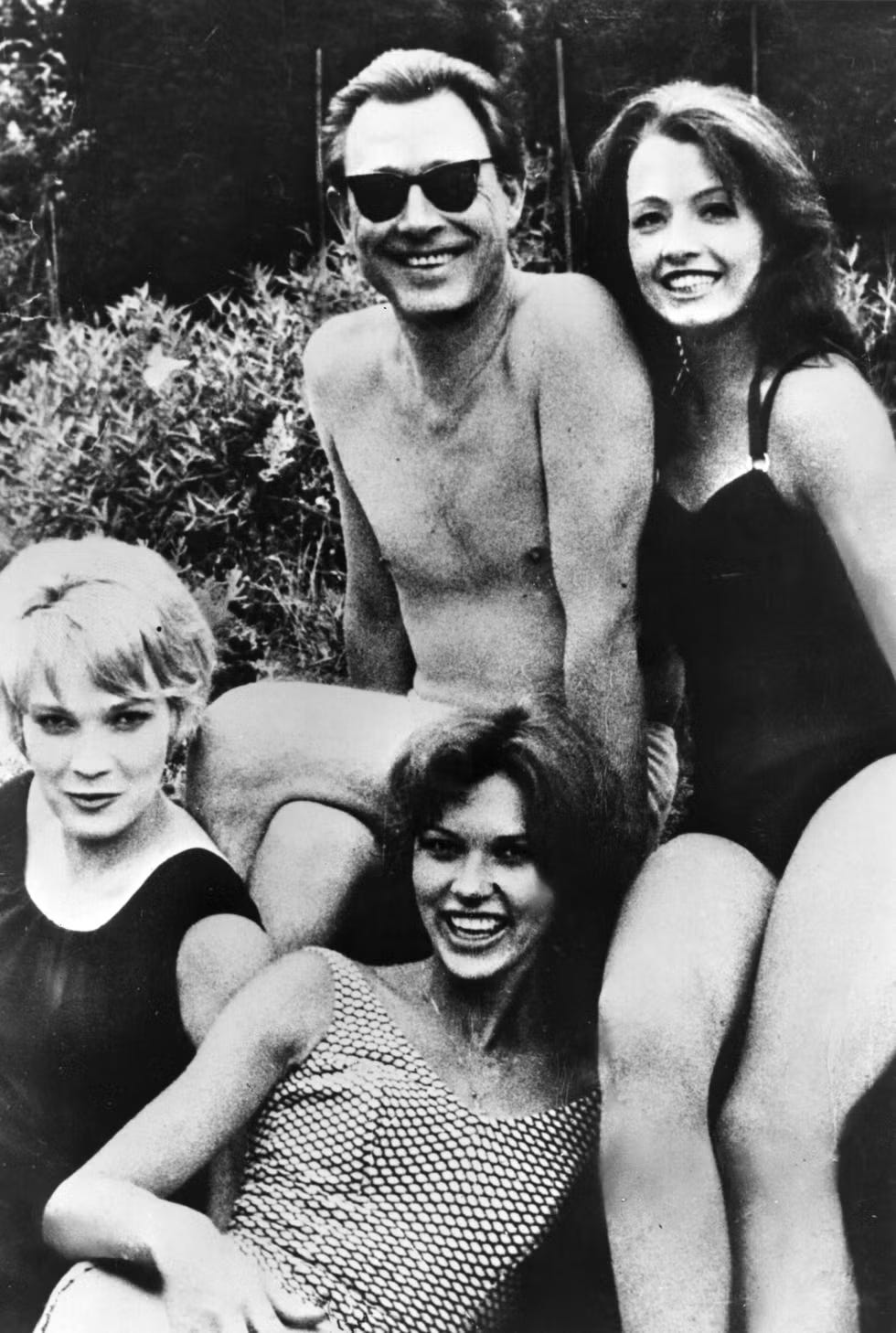
Once back in London, the high life resumed for Novotny. She began hosting memorable parties, and cemented her relationships with Lord Profumo, Christine Keeler — seen above at right with Stephen Ward and two unidentified women — and others to be involved in the Profumo affair.9
Remarks the Cliveden House in a historic retrospective, in the summer of 1962, Profumo and Keeler “embarked on an illicit affair following their chance meeting at Cliveden House; an affair which was to force his resignation, irrevocably damaging the Prime Minister's reputation and impact on the course of British politics forever.”10
FBI, Bowtie Papers, 1963.
John Simkin, https://spartacus-educational.com/SPYtowers.htm; also, The Guardian, Harry Alan Towers obituary, Sept. 30, 2009.
In his autobiography, Towers writes his bail was initially set at $100,000. The amount seems high. In “The Bowtie Papers,” the FBI states the initial bail was set at $10,000. “It was obvious that several well known people in the TV industry and other wealthy people were anxious to Towers to leave the U.S. to avoid public embarassment to themselves should he openly discuss the identities of persons for whom he procured prostitutes.”
FBI, “Bowtie Papers.”
Harry Alan Towers, “A Life in Show Business,” pub. 2012, p. 47. The amount seems high. $50,000 in 1963 would be worth more than $500,000 in 2025.
“A Life in Show Business.” pp. 47-49.
Bowtie Papers.
“A Life in Show Business,” p. 49.
See Spartacus Blog, “Mandy Rice Davies, Christine Keeler and the MI5 Honey-Trap,’ https://spartacus-educational.com/spartacus-blogURL132.htm.
https://www.clivedenhouse.co.uk/the-house/the-profumo-affair/.
Great stuff Rick
Just gobbled down parts 2 and 3 of this fascinating series! I always wanted to learn more about Towers, certainly he is one of the most intriguing figures in the genre film scene of the mid and late 20th century, as much for the political/social intrigues he got involved in as well as for the movies he produced with some of the quirkiest talents of the world. Thanks, RJ!